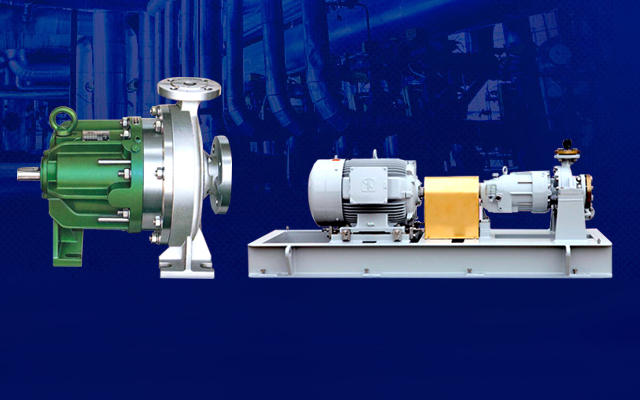
Over the past couple decades, there has been an increase in sealless pump installations across the United States. While sealless pumps have been around for a long time and have been more widely used in Europe, mag drive and canned motor pumping technology is seeing greater adoption in the chemical process and oil and gas industries.
Most chemical companies and refiners know what applications require sealless pumps, but if you’re new to the industry and you are not sure if you need a sealless pump, ask yourself these 3 important questions.
1. Has your process pump been experiencing frequent mechanical seal failures? What is considered to be “frequent” will vary from plant to plant. In some places, mechanical seal failure at a rate of every 6 months is unacceptable; in others, with critical or hazardous applications, just one mechanical seal failure is not acceptable. It really depends on the plant, what they are pumping, and what it costs in downtime to replace the mechanical seal. It is really important to know the equipment history. If the mechanical seal is frequently replaced, you might need to start looking at sealless pumping solutions.
2. Is the material being pumped hazardous to people or the environment? Do operations and maintenance personnel have to wear PPE (personal protective equipment) when working on or near the pump system? If the material being pumped is hazardous, dangerous, or an environmental contaminant, a zero-leakage sealless pump is likely needed. Safety is critical! Chemical processing plants often handle flammable materials, where leaks create risk of fire. It is important to keep plant personnel safe; so if you are pumping a ‘nasty’ chemical – the kind where you need to have a contingency plan in case of a spill, where you might have to notify the EPA (and in some cases, the EPA will have to notify local municipalities in case evacuation is needed) – this kind of material would demand sealless pumping technology to keep people and the environment safe.
3. Are you required to meet API 610 or API 685 Standards? Most people working in the oil and gas industry are familiar with the API 610 standard – and API 685 is essentially the equivalent of API 610 for sealless pumps in chemical process applications. API 685 details standards for sealless centrifugal pumps for petroleum and heavy duty chemical applications where discharge pressures are greater than 275 psig and where pumping temperatures are hotter than 300°F (150°C). There are sealless pumps and shaft-sealed pumps that meet API 610 and API 685 standards. To learn more about the sealless pump technology that is available to the market, visit www.dickow.com.
Have a question about sealless pumps? Post your questions in the Industry Forum or visit www.dickow.com.