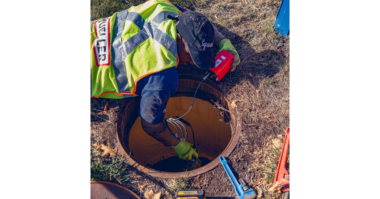
Behind every tap delivering safe drinking water is a skilled professional, but utilities are facing a growing workforce shortage.
This expectation of reliable, clean water – so fundamental that it’s often taken for granted – relies largely on the skilled professionals who operate, maintain and manage our nation’s water systems. Yet the water sector is at a critical juncture in managing its most valuable asset: its people. Addressing workforce challenges is not just an industry concern but a public health imperative.
Recent research from the National Association of Water Companies (NAWC) and Bluefield Research, based on in-depth conversations with leaders on the front lines of the water industry across 30 utilities and stakeholders in 18 states, provides a comprehensive, ground-level view of the workforce pressures utilities face. The findings confirm what industry leaders have long known: the sector’s “Silver Tsunami” of retiring workers, combined with increased competition for talent and evolving workforce expectations, demands immediate and innovative action.
The research reveals that regulated, private water companies are already pioneering people-focused solutions to build and sustain a resilient workforce for the future. And the good news is that these innovative approaches to addressing workforce challenges can be replicated across other utility companies and even industries.
The Business Case for Workforce Investment
The financial implications of workforce challenges are significant. Industry estimates suggest the cost of replacing a skilled operator ranges from 50% to 200% of their annual salary when factoring in recruitment, training, lost productivity and institutional knowledge loss. For utilities already constrained by rate-setting processes, these unplanned turnover costs create budget pressures that ultimately affect ratepayers.
Moreover, workforce shortages directly impact capital project delivery. The U.S. Environmental Protection Agency’s (EPA) estimates a $100 billion infrastructure need through 2040 for water treatment plants alone, which cannot be realized without adequate skilled labor to design, construct and operate upgraded facilities. Delays in filling critical positions can postpone compliance deadlines, defer needed system improvements and increase long-term costs.
Strategic Planning: Building Pipelines, Not Just Filling Positions
There is a direct connection between workforce challenges and public health. Approximately half of all water and wastewater plant operators are aged 45 or older, and many will retire within the next decade. When experienced operators leave, they take decades of institutional knowledge with them that is critical to maintaining treatment processes, responding to emergencies and ensuring regulatory compliance. This knowledge gap poses real risks to water quality and system reliability.
That’s why today’s workforce challenges require rethinking how the industry attracts and develops talent. Rather than simply posting job openings and hoping for applicants, forward-thinking utilities are creating comprehensive pipeline programs that introduce young people to water careers early and provide clear pathways to success.
Aquarion Water Company has transformed its approach through a robust internship program that allows the company to assess candidates’ technical aptitude and workplace fit over several months rather than based on a resume alone. The results speak volumes: nearly 50% of interns transition to full-time employment, providing a reliable source of hard-to-hire operators.
H2O America has shifted its approach to succession planning, prioritizing employees based on their criticality to operations rather than length of tenure alone. This enables the company to provide targeted development opportunities to potential replacements for key personnel, directly linking workforce planning to reliable service delivery.
Perhaps most importantly, these companies are approaching workforce management strategically rather than reactively. California Water Service implemented a comprehensive talent review program that rigorously assesses capabilities at all levels and identifies the incremental changes needed to reach future goals. Columbia Water Company is proactively planning for the retirement of its night shift operators by moving toward more autonomous operations and adjusting work schedules to better attract younger workers.
Making the Value Proposition Clear
Water utilities often struggle to compete on salary alone with industries like construction or trucking. Successful utilities are meeting this challenge by better communicating the total value of water careers. That means not just talking about take-home pay, but also benefits, work-life balance, job security and advancement opportunities.
Artesian Water Company developed a comprehensive “value of benefits received” analysis that quantifies the monetary worth of its entire benefits package. This enables prospective and current employees to make true apples-to-apples comparisons with other opportunities, often revealing that water utility compensation is more competitive than it initially appears.
Essential Utilities launched its Career Ladders program, an internal resource that clearly outlines salary ranges, responsibilities, certification requirements and timelines for advancement across all positions. By making career pathways transparent, the company helps employees understand they are not just taking a job but building a career.
Leveraging Technology and Education
Utilities are increasingly embracing technology to enhance training and recruitment. Middlesex Water Company uses digital tools, including onboarding videos, streamlined hiring software and even a digital twin specifically designed to train new operators in a risk-free virtual environment.
Meanwhile, partnerships with educational institutions are creating seamless pathways from classroom to career. Veolia North America developed state-approved high school curricula that allows students to sit for entry-level operator certification immediately upon graduation. The company’s Veolia Academy offers more than 100 free online courses to the public, advancing sector-wide education beyond its own workforce.
The York Water Company has also cultivated deep relationships with local schools and technical colleges, creating a natural pipeline of qualified candidates who are already familiar with the company and industry.
Building Community Awareness and Engagement
Technology and partnerships address the “how” of workforce development, but community engagement addresses the “who” by expanding awareness of water careers to reach untapped talent pools. The most successful utilities recognize that workforce solutions require collaboration beyond their organizational boundaries. They’re engaging with the communities they serve through public events, facility tours and career fairs to raise awareness about water careers among potential employees and the broader public.
This community engagement addresses what many in the industry call “suffering from success” – the water sector’s remarkable reliability has made it invisible to the public. When communities take clean water for granted, young people may simply be unaware that water utility jobs exist, and the broader public may underestimate the critical work utilities perform and the investments needed to maintain that reliability.
Utilities are countering this by consistently attending local high school career fairs and developing relationships with guidance counselors who can direct students toward water careers. These grassroots efforts, combined with partnerships with community colleges and technical schools, create awareness among the next generation of potential employees.
A Model for the Industry
The innovations emerging from regulated, private water companies provide a clear roadmap of actionable strategies that utilities of all sizes and ownership structures can implement. Whether through internship programs, second-chance initiatives, transparent career advancement systems, educational partnerships or strategic succession planning, the data is clear: investing in pipeline development, career-pathing and people-focused strategies yields tangible results in attracting and retaining the skilled professionals essential for providing reliable water service.
For utility leaders evaluating their own workforce strategies, the research points to several high-impact actions:
- Audit compensation structures to ensure they reflect total value, not just base salary.
- Launch formal internship and apprenticeship programs with local educational institutions.
- Build transparent career ladders that show employees clear advancement pathways.
- Deploy technology that streamlines hiring and enhances training.
- Partner with communities to raise awareness of water careers among young people.
- Prioritize strategic succession planning that identifies and develops critical talent.
While water utilities may largely operate behind the scenes, they are essential to public health, economic development and quality of life. By investing in creative workforce solutions today, the water industry is ensuring that future generations will continue to have access to the safe, reliable water service they deserve. That’s both good business and a public health necessity.
About the Authors
Robert Powelson has served as President and CEO of the National Association of Water Companies (NAWC) since 2018. He previously served as a Federal Energy Regulatory Commissioner and as Chairman of the Pennsylvania Public Utility Commission.
Greg Goodwin is a senior research director at Bluefield Research with experience across the clean technology, industrial operations and asset-based industries. He previously worked at LNS Research covering enterprise software strategies across environment, health & safety, manufacturing operations management and asset performance management research.
Originally published in Water Finance & Management.