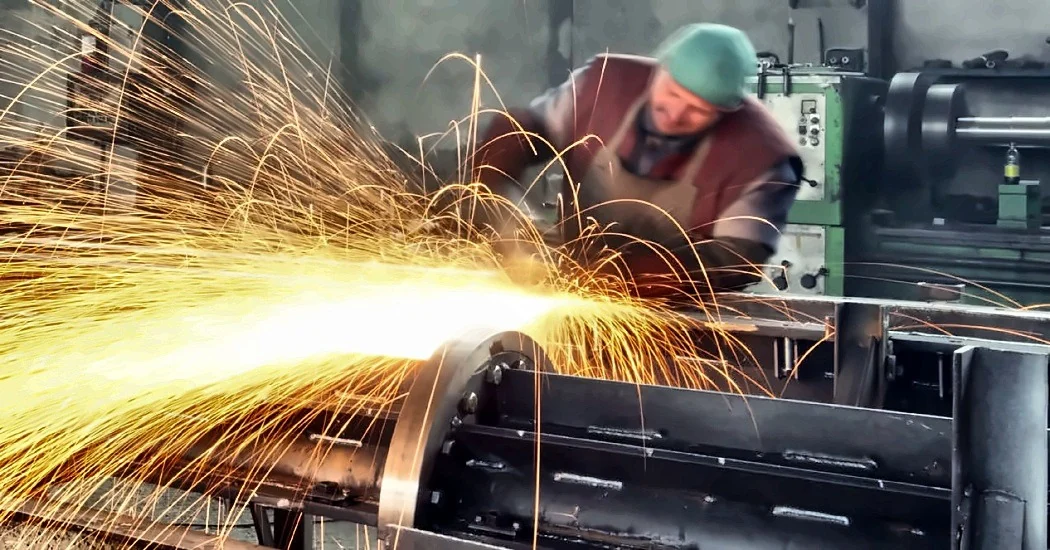
Feeding steel bar stock into centerless grinders can present challenges involving weight, length, and cutting frequency. As production demands increase, conventional variable frequency drives (VFDs) and dynamic braking resistors may struggle to manage the heat generated during operation.
A machine builder looking to improve productivity worked with an industrial distributor and system integrator to address these limitations using the Yaskawa U1000 Industrial Matrix Drive. Designed for regenerative operation, the U1000 helped the machine handle heavier steel bars, longer stock lengths, and deeper cuts while maintaining continuous operation.
The Challenge: Excessive Heat and Equipment Shutdowns
The original grinding machines used standard VFDs paired with dynamic braking resistors. Although this configuration worked for lighter steel bars and shorter stock lengths, increasing production demands exposed its limitations.
As bar weight, length, and cutting depth increased, excessive heat accumulated in the braking resistors. This triggered overvoltage faults that shut down the motor and interrupted production.
Each shutdown required additional downtime while the resistors cooled, limiting throughput and reducing overall productivity.
The Solution: Yaskawa U1000 Industrial Matrix Drive
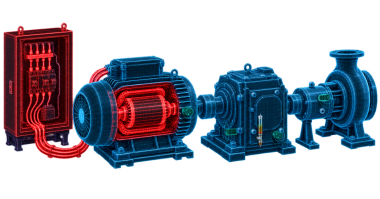
To overcome these challenges, the system integrator paired a Yaskawa U1000 Matrix Drive with a 5 HP gear motor.
The U1000’s regenerative capabilities allowed the system to transition between motoring and regeneration, supporting continuous operation under demanding grinding conditions.
Unlike the previous configuration, which relied on dynamic braking resistors to dissipate excess energy as heat, the regenerative drive returned excess energy to the utility.
This approach eliminated the need for braking resistors and reduced heat accumulation in the operating environment.
Results: Increased Throughput and Improved Reliability
With the U1000 Matrix Drive installed, the grinding machine could process longer steel bars, heavier loads, and deeper cuts without the interruptions previously caused by overheating braking resistors.
The updated system delivered several operational improvements:
- Increased production capacity: The machine processed more material in less time.
- Reduced downtime: Regenerative operation eliminated shutdowns associated with overheating braking resistors.
- Improved energy efficiency: Excess energy was returned to the utility rather than dissipated as heat.
- Reduced heat accumulation: Removing braking resistors prevented additional heat from entering the operating environment.
- Simplified equipment configuration: Fewer components contributed to improved overall reliability.
Key Features of the Yaskawa U1000 Matrix Drive
The U1000 Industrial Matrix Drive offers several capabilities designed to support demanding industrial applications:
- Input total harmonic distortion (iTHD) performance aligned with the 5% IEEE 519 guideline identified by Yaskawa.
- Adjustable torque limits and overtorque settings for acceleration control and equipment protection.
- Safe Torque Off (STO) functionality meeting IEC 62061 SIL 3 and EN ISO 13849-1 PLe requirements.
- A design that does not rely on DC bus capacitors that degrade over time.
- Built-in fusing.
By combining regenerative operation with low-harmonic performance, the Yaskawa U1000 provides an alternative to conventional VFD configurations for applications where braking energy and heat accumulation limit productivity.
For more information, visit Yaskawa’s U1000 Series.
Source: Yaskawa America, Inc., “Raising the (Steel) Bar: Expanding Operational Capacity by Reducing Heat Accumulation,” Success Story AR.DRV.105 (2025).