Bolted flange joint reliability depends on a predictable relationship between torque, stud tension, and gasket compression. When fastener friction varies, or corrosion damages the threads, applied torque may not produce the clamp load needed to maintain an effective seal.
Learning how engineered fluoropolymer-coated ASTM A193 Grade B7 studs can improve torque-to-tension consistency, reduce corrosion, and support more uniform gasket loading, will ultimately improve sealing reliability.
1. Confirm Torque-to-Tension Consistency
Applying the same torque to every nut does not guarantee equal stud tension. Variations in thread geometry, coating quality, nut dimensions, and surface friction can produce uneven clamp loads.
Testing of coated studs from multiple manufacturers has identified dry nut factors, or K-factors, ranging from approximately 0.11 to 0.18. This variation can leave some areas of the gasket underloaded while overstressing others.
Before selecting a fastener, request:
- Documented K-factor values
- Expected bolt-load variation
- Dry and lubricated test results
- Data for the intended nut and stud combination
2. Define the Assembly Condition
Lubrication can reduce friction and improve torque-to-tension consistency, but it is not permitted in every service. Certain chemical applications, including some chlorine services, may require dry assembly.
Do not apply torque values developed for lubricated studs to dry fasteners. Confirm whether lubrication is permitted and ensure the torque procedure matches the tested assembly condition.
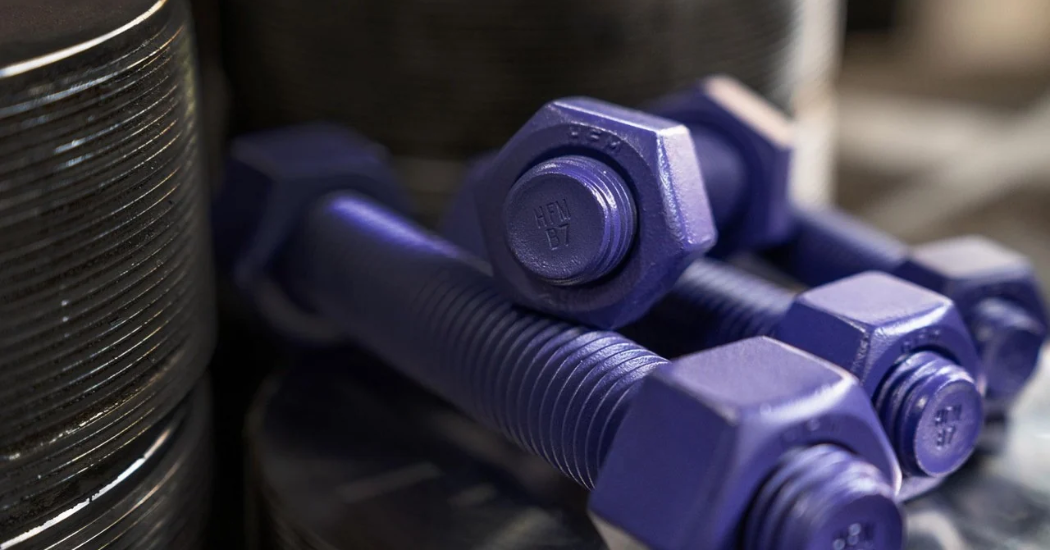
Controlled studies of PROTINN® coated studs demonstrated a K-factor of approximately 0.12 under both dry and lubricated conditions, helping reduce uncertainty during assembly.
3. Evaluate Coating Quality
The presence of a fluoropolymer coating does not guarantee consistent performance. Coating thickness, thread preparation, curing, and dimensional control can all influence friction and thread fit.
Look for a coating system supported by:
- Controlled application processes
- Consistent coating thickness
- Verified thread dimensions
- Repeatable K-factor testing
- Flange-level performance validation
Process control is what transforms a coated stud into a more predictable sealing component.
4. Check Corrosion Resistance
Corrosion, galling, and seizure can damage threads and make fasteners difficult to tighten, retighten, or remove. These conditions also disrupt uniform gasket loading during maintenance.
Engineered systems combining a zinc phosphate underlayer with a thin-film fluoropolymer topcoat have demonstrated more than 1,500 hours of ASTM B117 salt-fog resistance. This protection can help preserve thread integrity in chemical plants, coastal facilities, and offshore environments.
5. Consider the Complete Joint
Coated studs improve fastener performance, but reliable sealing depends on the entire assembly:
- Studs and nuts
- Coating and lubricant
- Gasket selection
- Flange condition
- Tightening sequence
- Torque accuracy
- Installer training
Changing one component may require revised torque values or assembly procedures. For critical joints, ultrasonic bolt elongation testing can confirm whether the intended stud tension was achieved.
Make Flange Assembly More Predictable
Reliable sealing begins with components that reduce uncertainty. Properly engineered coated B7 studs can provide consistent clamp loads, corrosion protection, improved serviceability, and more balanced gasket compression.
TEADIT® offers PROTINN® coated B7 studs with technical guidance related to torque values, assembly practices, and gasket compatibility. Contact TEADIT® to evaluate your application or request a PROTINN® trial.
Learn more about precision bolting for advanced sealing.