
Consistent wood feeding plays an important role in pulp quality, equipment reliability, and production efficiency. In pulp and paper mills, high-powered chippers and refiners process raw wood into chips and fibers. However, variations in wood density, moisture content, and material flow can create significant changes in motor load, affecting equipment performance and the consistency of the finished product.
Motor power monitoring helps operators identify these fluctuations and maintain more stable processing conditions. By continuously measuring true motor power, monitoring systems can detect sudden increases in material load, interruptions in feeding, and other operating changes as they occur. This information can be used to adjust conveyor or feed screw speeds automatically, helping maintain a more consistent workload.
For pulp and paper manufacturers, monitoring motor load provides a practical way to improve process control, reduce the risk of equipment damage, and support reliable production.
Why Is Consistent Wood Feeding Important in Pulp and Paper Mills?
Variations in wood feed can affect equipment performance, production efficiency, and the quality of the finished pulp. Real-time motor power monitoring helps operators identify changing load conditions and maintain more consistent processing. Key benefits include:
- Maintaining Consistent Fiber Quality: During refining, the energy applied to wood fibers influences pulp quality. Motor power monitoring, combined with production flow data, helps operators track specific energy input and maintain more uniform refining conditions.
- Detecting Feed Plugging and Bridging: When wood chips become lodged in a feed throat or material flow is interrupted, motor load may decrease. Load monitoring systems can detect these underload conditions and trigger an alarm or corrective action, such as reversing a feed screw when the equipment is configured for it.
- Protecting Against Tramp Metal: Foreign metal entering a chipper or refiner can cause sudden motor load spikes. High-speed motor power monitoring can identify abnormal load conditions and initiate protective actions to help prevent damage to blades, refiner plates, and other components.
- Optimizing Production Throughput: Monitoring motor load in real time allows operators to adjust feed rates and operate closer to equipment capacity while staying within safe operating limits. This can help increase production while reducing the risk of motor stalls and unplanned downtime.
Precision Motor Power Sensors for Pulp and Paper Processing
Load Controls provides rugged sensors and digital units built to withstand the vibration and high-torque environments common in wood yards and pulp mills.
- Universal Power Cell (UPC) – The premier sensor for large refiner motors. It uses balanced Hall Effect sensors to calculate true motor power, delivering a linear 4-20mA signal ideal for tracking wood-feed consistency within a SCADA system.
- PMP-25 Load Control – Features a digital horsepower display and adjustable high/low trip set points to protect chippers from jams and empty-feed conditions.
- ROC-50 Rate of Change Control – Built for chippers, it detects how fast load is increasing, identifying a mechanical “crash” or tramp metal strike faster than a standard static sensor.
- TP-2 Compact Motor Power Sensor – Designed for smaller auxiliary motors on conveyors and barkers, this loop-powered sensor provides continuous power feedback for facility-wide energy monitoring.
Where Are Motor Load Controls Used in Wood Preparation and Pulping?
Controlling mechanical workload is vital to the efficiency of the entire paper-making process, from the wood yard to the final press.
- Wood Chipper Protection – Chippers face unpredictable loads. Power monitoring flags when knives are dulling, since the motor needs more power to process the same volume of wood.
- Mechanical Pulping Refiners – The refiner is one of the largest energy consumers in the mill. Tracking true power is the only accurate way to calculate energy cost per ton of pulp produced.
- Conveyor and Feed Screw Control – Load controls on feed systems ensure the refiner is never overfed or starved, preventing surging and keeping material flow steady.
- Barker and De-knotter Monitoring – Power sensors detect when a barker is overloaded by a large log or a de-knotter is becoming plugged with rejects, enabling automated corrections.
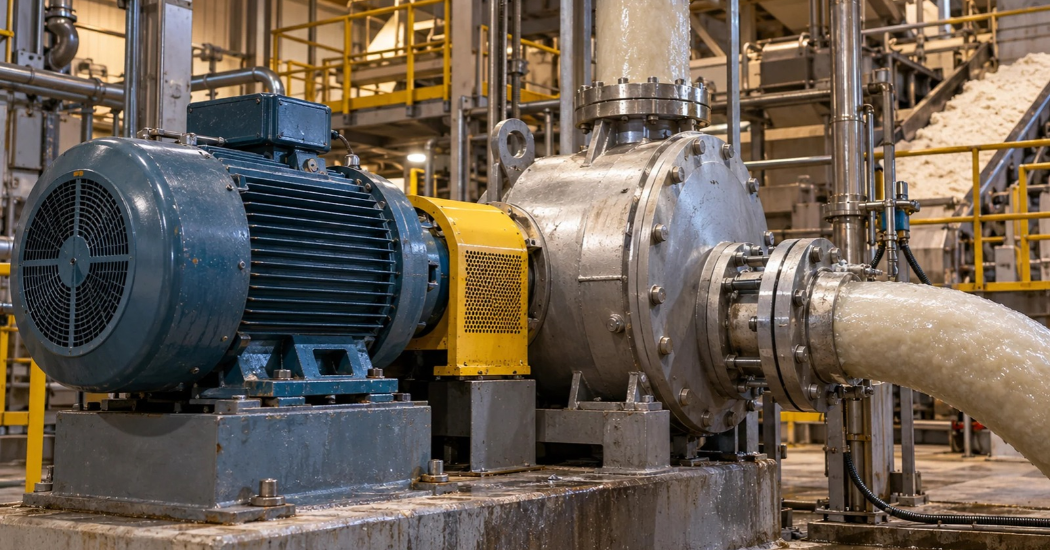
Mechanical pulping refiner motor in paper mill processing line
What Financial and Compliance Benefits Does Power Monitoring Offer Pulp Mills?
Motor power sensor data helps pulp and paper mills lower operational costs while meeting corporate sustainability goals.
- Reducing Energy Costs per Ton – Pulping is energy-intensive. Viewing motor power data in kilowatt-hours lets facilities optimize processes for maximum efficiency, directly lowering the electric bill.
- Avoiding Catastrophic Plate Damage – Replacing a set of refiner plates can cost tens of thousands of dollars. Fast-response power sensors prevent this damage by stopping the motor during a crash event.
- Supporting ISO 50001 Certification – High-resolution power data from major motors is essential for establishing energy baselines and identifying Significant Energy Uses within the mill.
- Analyzing Tool and Blade Wear – Trending the power required to process a standard volume of wood helps maintenance teams schedule knife and plate changes based on actual wear, not a fixed calendar.

SCADA dashboard displaying real-time motor power monitoring data
About Load Controls and Industrial Control Solutions
Load Controls, part of Industrial Control Solutions, specializes in the manufacture of load controls, pump controls, universal power sensors, and other sensors. The company prides itself on the diversity and quality of its product offering and the industry leadership position its brands have held for over 40 years.
As a Service-Disabled Veteran-Owned Small Business, Industrial Control Solutions believes in applying the same principles of military service to its everyday practices: tireless dedication, rigorous standards of quality, and faithfulness to its values and mission. This translates into providing a high-quality product to exact specifications that always exceeds performance expectations.
Industrial Control Solutions is built on its extensive offering of high-quality, customized switches, sensors, and thermocouples, custom-built and shipped to exact specifications based on application, media environment, and other performance requirements.
Industrial Control Solutions is fiercely committed to its clients, particularly those who have been loyal partners throughout its 40+ years of operation, staying true to the core values the brand was built on: high-quality products with a focus on customer service.
Load Controls is ISO 9001:2015 certified, giving customers confidence that internal processes and products are held to the highest standards of quality and rigorous testing.
Load Controls’ product portfolio spans specialized USA-manufactured lines:
- Whitman Controls – Pressure switches, vacuum switches, differential pressure switches, temperature switches, continuous level transmitters, and more.
- Thomas Products – Flow switches, level switches, pump controls, multi-level switches, visual indicators, and related accessories.
- Duro-Sense – Platinum and Noble thermocouples, RTDs, and ISO 17025-calibrated wire sales.
Frequently Asked Questions
How does motor power monitoring improve wood-feed consistency?
It measures true motor load in real time, so operators can spot material slugs or empty-feed conditions immediately and adjust conveyor or feed screw speed to keep the workload steady.
What causes chipper and refiner motor overloads?
Overloads are usually caused by inconsistent wood density or moisture, feed plugging and bridging, dull blades requiring more power, or tramp metal entering the machine.
How do power sensors protect refiner plates from damage?
Fast-response sensors like the ROC-50 detect sudden load spikes from tramp metal or mechanical crashes within milliseconds, stopping the motor before blades or refiner plates are destroyed.
What is the Universal Power Cell (UPC) used for?
The UPC is a Hall Effect sensor built for large refiner motors. It calculates true motor power and outputs a 4-20mA signal for integration into a mill’s SCADA system.
How does power monitoring support ISO 50001 certification?
It provides the high-resolution energy data mills needed to set energy baselines and identify Significant Energy Uses, both required elements of ISO 50001 compliance.
Originally published by Load Controls.