Contributor: Carver Pump
Marine vessels have many fluid management systems, ranging from raw water supply, freshwater circulation, and wastewater disposal. Marine vessels depend on raw seawater for many onboard applications, including fire suppression, propulsion cooling, auxiliary cooling, and feed water for desalination systems that produce drinking water. Additionally, there are many onboard wastewater systems that either sanitize and reuse or filter and dispose of bilge water, gray, and black water.
In this introductory article, we will discuss three applications for pumps operating aboard marine vessels: propulsion and auxiliary engine cooling, bilge transfer, and potable water.
Propulsion & Auxiliary Engine Cooling
Main propulsion engine units are directly connected to the propeller shafts and are designed to provide a marine vessel with forward motion. Auxiliary engines are smaller, secondary engines that can be connected to power generators to provide power to a vessel’s lighting, electronics, and HVAC systems. Engine cooling systems utilize liquid coolants or thermal oils circulating through heat transfer pipes routed through the engines. Once the coolant or oil has passed through the engine, it is routed through seawater tanks for further heat transfer.
 Related Content: Keeping the Deadliest Catch Alive!
Bilge Transfer
The lowest compartment of a vessel’s hull is called a bilge. Water can collect in bilge wells for many reasons: high seas, rainwater, internal spills, and leaks in the hull. Aside from water, various substances like oil, chemicals, and fuel from leaky pipes or loose fittings can end up in the bilge wells as well. The combination of fluids and litter collected in bilge wells results in a dirty wastewater that must be filtered and disposed.
Potable Water
Marine vessels use desalination plants to turn raw seawater into drinking water. Through a process known as reverse osmosis, seawater is forced through a semi-impermeable membrane that prevents salt particles from passing through. Raw water is separated, forming a stream of highly concentrated brine and a stream of clean, desalinated water. The desalinated stream is treated with additional disinfectants before it is stored or circulated throughout the ship. Marine water supply networks transport treated water from onboard storage tanks to water access points throughout the vessel – mainly washrooms, showers, and kitchens.
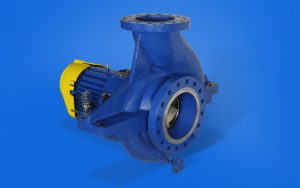
GH Series End Suction Centrifugal Pump from Carver Pump (DNV GL & ABS Certified)
Questions about pumps for marine applications? Contact Carver Pump to talk about your application and requirements.