Installation involves several critical elements, including alignment practices, commissioning costs, and compliance with safety regulations. Understanding the economic implications of these factors is paramount in optimizing total life-cycle costs and ensuring long-term operational reliability.
Centrifugal pumps used in petrochemical, chemical and refinery applications need to be verified for precise alignment during installation.
How are Pumps and Motors Secured?
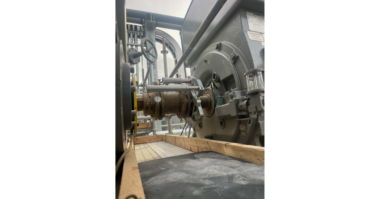
To maintain good alignment, it is important to minimize vibrations by securing the pumping system to strong and heavy foundations. Industrial pumps are normally bolted directly to a machined baseplate and other equipment is aligned and secured to it. The entire assembly is sited on a concrete foundation and affixed with epoxy or cement grouting. When constructed properly, overall vibrations can be substantially reduced because of the damping effect of the foundation mass. As a general rule, foundations should be at least three times the mass of the pumping system for centrifugal pumps.
Understanding Pump Alignment:
Achieving seamless power transmission from a motor to a pump is essential for optimal system performance. However, misalignment can manifest in three primary forms: radial misalignment, axial misalignment, and angular misalignment. These deviations from ideal alignment can lead to a cascade of issues, including premature wear of pump components, increased maintenance costs, and reduced operational efficiency.
The movement of power from a motor to a pump is achieved by connecting the motor shaft to the pump shaft, either directly or through a coupling of some type. Misalignment can occur in three ways:
- Radial (offset or parallel) misalignment The centerlines of the two shafts are parallel but offset.
- Axial (or end float) misalignment The two shafts are aligned but one (or both) axles are liable to cause in/out movement along the centerline.
- Angular misalignment The centerlines of the two shafts are not parallel.
If these problems are not corrected, a system may undergo several problems including the early failure of the pump or motor. Shaft misalignment can cause premature wear of a pump’s seal, packing, shaft, and bearings. This can then lead to extreme leakage and the system will exhibit unwarranted vibration and noise, reduced efficiency, and increased power and maintenance costs.
Preliminary Alignment
Manufacturers should carry out a preliminary alignment test prior to installation. Positioning of the system on its foundation, and proceeding with grouting and the connection of piping may introduce unwanted stresses which affect the alignment. In the early days of operation, thermal expansion and contraction can also cause movement in the bearings which affects alignment.
Alignment should therefore be checked carefully and repeatedly throughout installation, during the initial days of operation, following maintenance or repairs, and scheduled periodically. Shaft alignment should also be monitored during the connection of any pipework. All components must be supported and introduce no stresses or strains on any other parts of the system.
If the system operates at temperature, alignment should be checked with the system filled with liquid and, if appropriate, at temperature because of the likelihood of thermal expansion.
What is Thermal Growth?
During operation at temperature, expansion of the drive shaft and other pump components will affect a pump’s alignment. This consequence is called thermal growth and must be taken into account when selecting and fitting a shaft coupling and when correcting shaft alignment.
How is Alignment Measured?
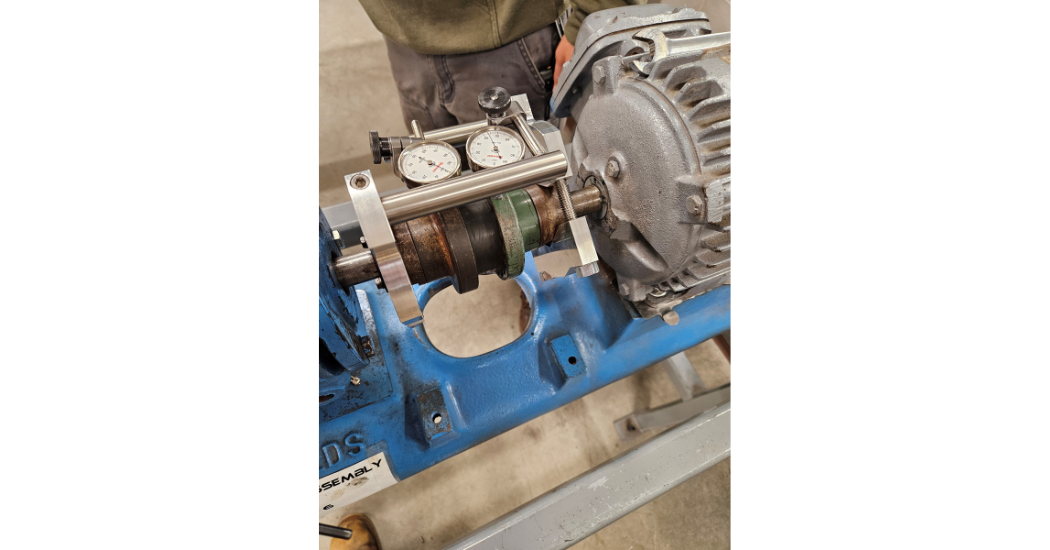
For horizontal pumping systems, there are two main components to alignment:
- Parallel misalignment The perpendicular horizontal misalignment between the two shafts’ center lines
- Angular misalignment The angle between the two shafts’ center lines
A final expense within the installation-cost realm is commissioning costs. These are the fees that must be paid to have the installation reviewed to ensure that it satisfies all of the parameters for proper installation and safe operation. Only after this review has been performed and sign-off received will the facility manager be able to flip the switch and begin operating the pump.
In the end, it all comes down to each individual facility’s needs, wants and economic considerations, with all of the spokes in the installation-cost wheel playing a part in determining total life-cycle costs.
A-Line Alignment Tools:
A-Line tools are designed to provide accurate measurements of motor and pump shaft positions at multiple points, ensuring precise alignment. From feeler gauges to dial indicators, they offer a comprehensive range of alignment devices to suit your needs.
Upgrade to A-Line equipment alignment tools today and experience the difference precision makes!