With growing climate concerns, the world looks to natural gas to as a clean way to meet energy demands. Liquefied natural gas (LNG) is liquefied by cooling the gas to -160°C or below (<-256°F), loaded into special tankers for transport, then turned back into gas at its next terminal.
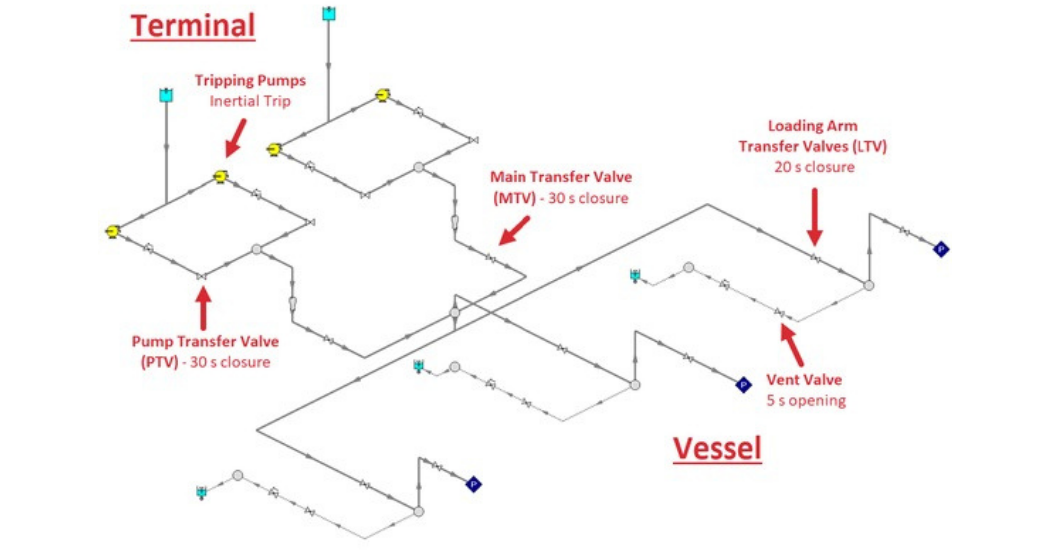
The LNG loading process occurs through loading arms, constructed of expensive low-temperature alloys for cryogenic operation and designed to consider the moving vessel the arm is attached to. An LNG terminal might have two to five loading arms for different purposes. In an emergency shutdown, flow through these arms must be suddenly halted by closing a sequence of valves, opening vent valves, and tripping transfer pumps.