Flexible graphite has built its reputation as a dependable sealing material in refineries and chemical plants. Its ability to handle aggressive chemicals, conform to sealing surfaces, and operate in demanding environments has made it a cornerstone of low-emission valve packing.
As operating temperatures are climbing and emissions standards are tightening, it is essential that the industry take a closer look at how graphite performs at the upper limits of service conditions.
The Industry Raised the Temperature
The 2022 update to API 622 introduced two major changes:
- A new high-temperature fugitive emission testing, at 400°C (752°F)
- A new step in its weight-loss test protocol, with 24-hour at 593°C (1100°F)
These updates reflect a growing industry focused on understanding valve packing performance at extreme temperatures, where oxidation risk becomes critical.
Graphite performs reliably at 260°C (500°F). At higher temperatures, particularly in the presence of oxygen, oxidation begins to degrade the material. The result is gradual mass loss and reduced sealing integrity.
The question is no longer whether graphite works. The question is how far its performance can be pushed.
The Truth About Oxidation-Inhibited Graphite
Three commercially available oxidation-inhibited graphite tapes were evaluated over the temperature range of 400°C (752°F) to 700°C (1292°F) using thermogravimetric analysis.
All materials met the industry requirement of maintaining an oxidation rate below 4 % per hour at 670°C (1238°F).
Yet the differences between them were significant:
- Two graphite grades maintained oxidation below 1% per hour.
- A third grade approached the acceptable limit at 3.35% per hour.
Even within materials classified as oxidation inhibited, performance varies considerably at elevated temperatures. This matters most in oxygen exposed service.
Why Finished Packing Behaves Differently Than Raw Material
- Valve packing is not just graphite tapes. It is a system that often includes:
- Flexible graphite
- Inconel reinforcement
- PTFE impregnation for emissions control
Testing graphite in tape, yarn, and finished packing forms revealed a critical performance shift.
As graphite moved from raw material to finished packing, oxidation increased significantly. The addition of PTFE, while effective for low emissions, accelerated oxidation across all graphite grades.
Graphite grades that showed higher oxidation as tape degraded more than twice as fast once converted into packing.
The message is clear. Material testing in isolation does not tell the full story.
What Happens Inside a Real Valve
Laboratory tests often expose materials to open-air conditions. Real valves are different. Packing operates inside confined stuffing boxes with limited oxygen exposure.
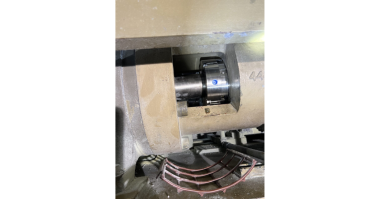
To simulate real service, packing sets were installed in a stuffing box test rig and exposed to a thermal cycle that included startup conditions and 24 hours at 593°C (1100°F).
The results were striking.
Oxidation was significantly lower in the confined stuffing box environment than in open-air testing. Reduced oxygen slowed degradation.
However, PTFE impregnated packing still showed higher weight loss, and degradation increased sharply as the temperature approached 593°C (1100°F).
Confinement reduces oxygen exposure, thereby slowing degradation. This highlights the importance of considering installation geometry when evaluating long-term packing performance.
What This Means for Valve Reliability
These findings translate into several practical insights:
- All tested graphite grades met oxidation-inhibited criteria.
- Testing methods produce consistent results across multiple approaches.
- PTFE improves sealing performance but increases oxidation at high temperatures.
- Confined stuffing box environments slow oxidation by limiting oxygen exposure.
- Packing performance must be evaluated as a complete system under realistic conditions.
The Bigger Picture
Higher temperatures and stricter emissions requirements are changing how valve packing must be evaluated.
Reliable sealing cannot rely on basic certifications alone. It now depends on understanding how materials, additives, construction, and installation conditions interact under real operating environments.
For a more in-depth understanding of the testing process and results, read the full article!