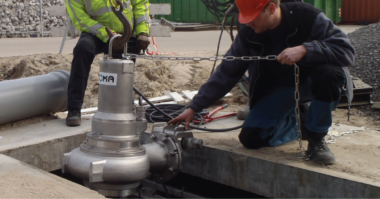
As wastewater systems contend with tougher solids, lower flows and persistent clogging challenges, manufacturers are turning to operators and maintenance professionals to engineer the next generation of chopper pumps built for today’s evolving wastewater realities.
For decades, the wastewater industry has been fighting a battle that has seemed unwinnable.
The symptoms are familiar. Pumps clog. Maintenance crews respond. Operators pull tangled masses of wipes, textiles and debris from impellers. Systems return to service—until the next blockage inevitably occurs.
Despite decades of engineering advances, clogging remains one of the industry’s most persistent operational challenges. In many respects, today’s wastewater has become even more difficult to manage than it was a generation ago.
Disposable wipes labeled as “flushable,” stronger synthetic fibers, changing consumer habits and increased water conservation have fundamentally altered what moves through municipal collection systems. Lower flows mean higher concentrations of solids. Longer force mains create different hydraulic demands. Materials entering wastewater systems are stronger, more durable and often far less forgiving than those engineers designed equipment to handle 20 years ago.
The result is a moving target.
For manufacturers, solving today’s clogging challenges requires more than refining pump hydraulics or improving cutting technology. It requires understanding how wastewater itself continues to evolve—and how operators experience those changes long after a product leaves the factory.
For HOMA Pump Technology, conversations in the field were the foundation for developing its new OC Series of chopper pumps, a product family designed in response to changing wastewater conditions and the people responsible for managing them every day.
“The OC Series was created out of market demand and interest from our customers,” said Nick Terranova, Product Manager for HOMA Pump Technology. “It was really about communicating with them, understanding the problems they were facing and creating solutions that responded to those needs.”
 Wastewater Doesn’t Stand Still
One of the greatest misconceptions about wastewater infrastructure is that the challenges remain constant.
Every shift in consumer behavior eventually finds its way into the collection system. Products designed for convenience become unexpected maintenance problems. Water conservation initiatives reduce system flows while increasing solids concentrations. Municipalities expand service areas, requiring pumps to move wastewater over greater distances and elevations than before.
“The need for advanced technology was really about the evolution of modern wastewater,” Terranova explained. “You’re dealing with wipes and rags, but you’re also seeing increasing pressure to handle low-flow and very high-head applications in ways we really weren’t dealing with 15 or 20 years ago.”
Those changing conditions have transformed pump selection from a relatively straightforward equipment decision into a careful balance between hydraulic performance, solids handling, reliability and long-term maintenance requirements.
Simply making an existing pump stronger is rarely enough.
Engineers must also anticipate how wastewater will continue to change over the next decade.
Engineering Begins with Listening
For many years, industrial product development followed a familiar pattern.
Engineers identified a problem, developed a solution and introduced it to the market.
Today, that process is becoming far more collaborative.
Rather than assuming they understand every operational challenge, manufacturers increasingly rely on the people who encounter those challenges every day—operators, maintenance technicians, mechanics, distributors and service professionals.
Their experience provides insights that no laboratory simulation or computer model can fully replicate.
“It’s important because those are the people who really know what’s going on,” Terranova said. “It’s easy for us to sit back and think what should be happening, but sometimes that’s different from the realities of the people who have boots on the ground.”
That observation captures an important shift occurring across the wastewater industry.
The best engineering no longer happens in isolation.
Instead, it develops through an ongoing exchange of ideas between those who design equipment and those who depend on it daily.
Experienced mechanics notice wear patterns long before they appear in engineering reports. Operators recognize recurring clogging conditions that vary from one lift station to another. Distributors identify regional trends across dozens of municipalities. Every conversation adds another layer of understanding.
Sometimes those conversations challenge long-held assumptions.
Sometimes they reveal problems engineers never anticipated.
“Often, we’re getting input from unexpected sources,” Terranova said. “The technical team didn’t know something was going to be a problem until someone in the field pointed it out. That level of understanding is how we can work to develop a product that solves those problems.”
Terranova describes product development as “an old mechanics versus engineers conversation.” It’s all about perspective.
Engineers understand hydraulic calculations, metallurgy and motor performance. Mechanics understand what happens after thousands of operating hours when pumps encounter conditions no design specification can fully predict.
Neither perspective is complete without the other.
 When both groups contribute to the development process, products become more responsive to real-world operating conditions rather than idealized ones.
That collaborative philosophy ultimately shaped the development development and recent expansion of HOMA’s newest generation of chopper pumps, the OC Series.
Instead of beginning with a list of product specifications, engineers began with a different question: What are operators asking us to solve?
From Field Feedback to Engineering Solutions
Listening, however, is only the first step.
Eventually, every observation from the field must be translated into an engineering decision.
For HOMA, that meant taking years of conversations with operators, maintenance technicians and distributors and asking a simple question: What does modern wastewater require from a chopper pump that previous generations did not?
The answer wasn’t a single feature or breakthrough technology. It was a series of incremental design improvements intended to address the complexities of today’s collection systems.
“We’re expanding the range,” Terranova said. “We’re listening to where people are having the best success, where they’re finding potential gaps and then filling those gaps. We’re molding the product to fit the market realities.”
Rather than replacing HOMA’s existing pumps, the OC Series expands the company’s portfolio to address applications requiring higher heads, greater hydraulic performance and more aggressive solids reduction than previous generations.
 The engineering challenge is deceptively complex.
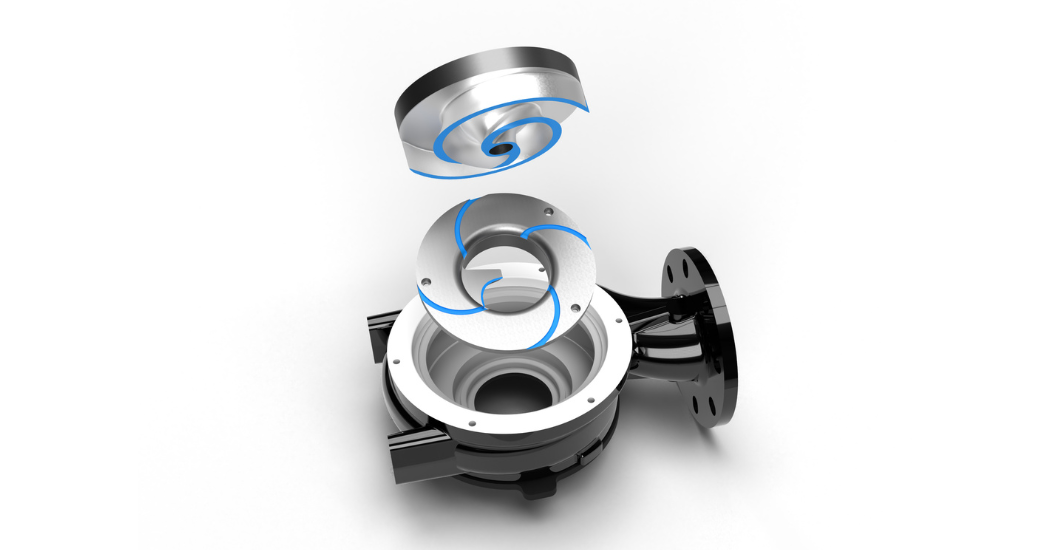
A chopper pump must do far more than simply cut solids. It must reduce fibrous materials before they accumulate around the impeller, while simultaneously maintaining hydraulic efficiency, minimizing energy consumption and producing enough pressure to move wastewater through increasingly demanding systems. Improving one performance characteristic often affects another, requiring engineers to carefully balance competing priorities rather than optimize a single metric.
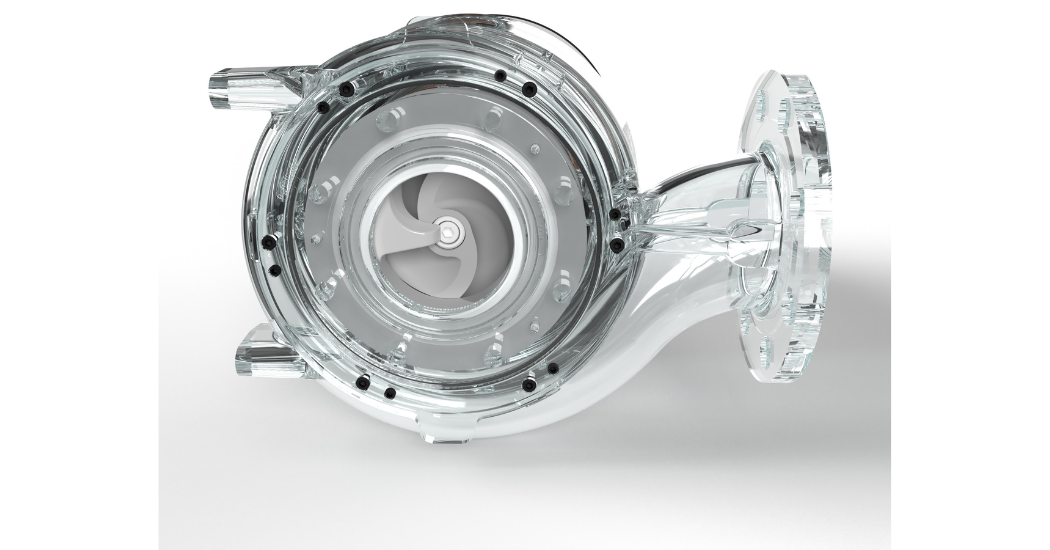
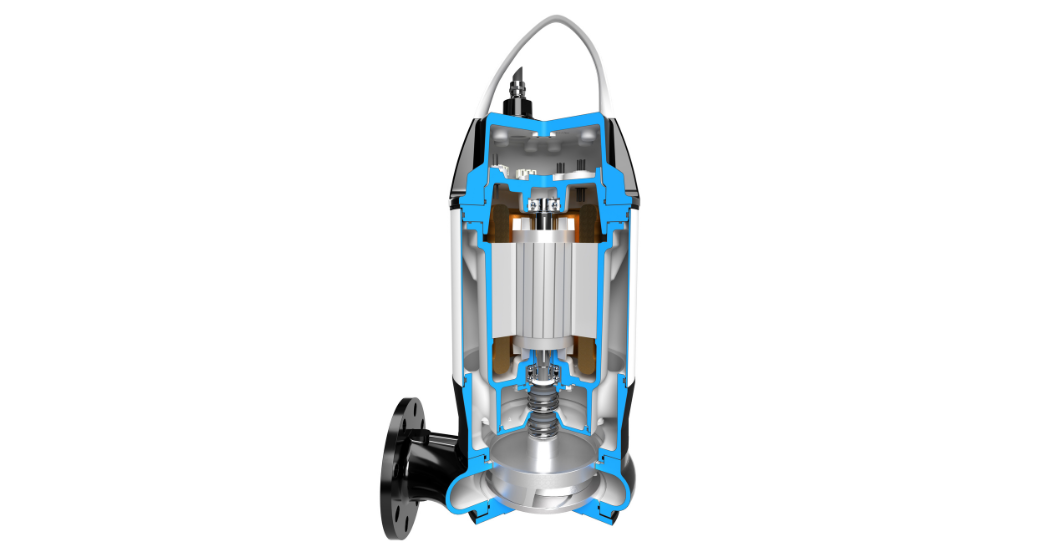
The OC Series addresses that challenge through an integrated cutting system that continuously shears fibrous materials as they enter the pump. High-chrome white iron hydraulic components provide wear resistance in abrasive environments, while the hydraulic design supports higher total dynamic head applications that have become more common as municipalities expand service areas and adapt to changing infrastructure demands.
Each of those engineering decisions reflects a larger trend occurring throughout the wastewater industry. Rather than designing equipment around ideal operating conditions, manufacturers are designing for the unpredictable situations operators encounter every day.
There Is No “Perfect” Chopper Pump
For an industry accustomed to hearing promises of breakthrough technologies and permanent solutions, modern wastewater requires acknowledging the continuous evolutions of problems that pump manufacturers need to solve.
“I don’t think there’s a single answer to a lot of these problems,” Terranova said. “That’s why you’ve seen so many different approaches to handling rags, wipes and challenging wastewater.”
Successful pump selection depends on matching the right technology to the right application. Wastewater is inherently unpredictable.
While manufacturers can develop effective technologies for handling fibrous materials and difficult solids, no pump can eliminate every object that enters a collection system. Rocks, construction debris, metal fragments and countless other foreign objects will continue to find their way downstream.
Clogging dominates industry conversations despite decades of innovation.
“The magnitudes have changed over the years,” Terranova said. “While we’re working on improvements, other industries are making the problems worse. The materials continue to change, so we’re always chasing what the rest of the world is giving us.”
Wastewater manufacturers operate downstream in more ways than one. They are literally downstream from homes, businesses and industries. They are also downstream from changing consumer behavior, evolving regulations and new products entering the marketplace.
Their engineering priorities are often defined by decisions made somewhere else.
That reality makes responsiveness just as important as innovation.
Reliability Doesn’t End at Installation
Listening to customers extends well beyond product development.
It also influences how manufacturers support equipment throughout its operating life. For municipalities and industrial facilities, reliability is measured over years—not at startup.
When a pump requires maintenance, operators need replacement parts quickly. Technical support must be readily available. Distributors must understand the application well enough to recommend practical solutions rather than simply equipment replacement.
 Terranova sees those responsibilities as an essential part of serving the customer.
“When I talk about availability, I mean keeping spare parts on the shelves so we can get them to people as quickly as possible,” he said. “We’re supporting maintenance and the continued use of products rather than simply trying to sell someone something new.”
That philosophy reflects a broader shift occurring throughout industrial manufacturing. Equipment manufacturers are recognizing that long-term relationships are built not by the initial sale, but by the years of service that follow.
“It has to be a holistic approach,” Terranova said. “It’s not something you decide to turn on one day. It’s something you build your entire organization around.”
For wastewater professionals, that commitment can have a measurable impact on lifecycle costs, equipment uptime and maintenance planning.
In many cases, responsive aftermarket support becomes just as valuable as the equipment itself.
 The Future of Wastewater Engineering Is Collaborative
If there is one lesson emerging from the wastewater industry’s ongoing battle against clogging, it’s that engineering can no longer be separated from experience.
The next generation of pumps will certainly incorporate stronger materials, improved hydraulics and more sophisticated cutting technologies.
But perhaps their greatest advancement will be the way they are developed.
Instead of beginning with assumptions, manufacturers are beginning with conversations.
They are asking operators what they experience during a midnight service call.
They discuss with mechanics about what fails after years of operation.
Distributors are communicating about what customers need but cannot yet find.
Those conversations become the blueprint for future innovation.
For Terranova, that collaborative philosophy is ultimately what he hopes customers remember.
 “We’re interested in working hand in hand with our customers to find the best solution and then support that solution for the long term,” he said. “We want them to know that we’re listening and constantly improving ourselves and our products because the market realities are constantly shifting. The right answer today may not be the right answer tomorrow.”
That observation extends well beyond a single product launch.
The wastewater industry will continue to change. Consumer products will evolve. Hydraulic demands will shift. New challenges will replace old ones. Manufacturers cannot predict every change waiting downstream. What they can do is remain close to the people who encounter those changes first.
Because in wastewater, the most important innovation may not be a sharper cutter, a more efficient hydraulic design or a higher-performing pump.
It may simply be the willingness to listen and the ability to respond.
 Michelle Segrest is President of Navigate Content and has been reporting on the pump industry since 2008. She is the author of the popular Modern Manufacturing book series.