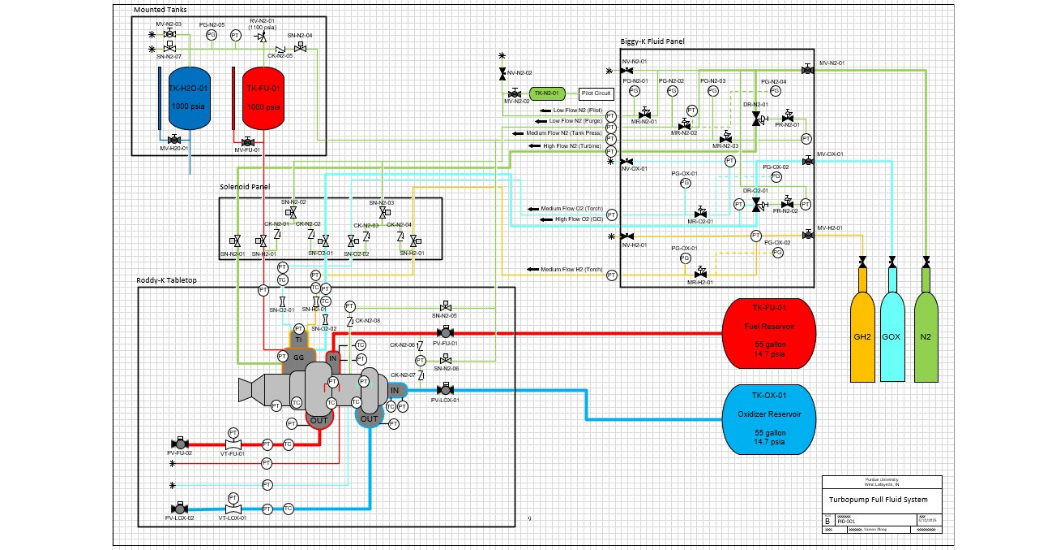
Design of a kerosene-oxygen turbopump utilizing a conventional open-cycle system architecture sized to power a 5,000-lbf thrust chamber is described. A conservative design approach tolerant of low performance in return for reduced risk, ease of integration, and lower cost is utilized. The conventional, single-shaft oxygen-kerosene-turbine arrangement is chosen, allowing substantial use of FASTRAC and F1 prior art, and operating speed is maintained well below the first critical speed. Programmatic risk is further reduced through leverage of commercial tools such as CFturbo and Dyrobes for pump and rotordynamic design. Both additive and subtractive manufacturing processes are utilized, and requisite design for manufacture is discussed. Plans and procedures for manufacturing and quality assurance, as well as buildup of test and auxiliary infrastructure are additionally outlined in depth.
A team of undergraduates, comprised mostly of first-years, was assembled with the objective to design, build, and test a rocket engine turbopump within the span of approximately one academic year, with a long term goal of a full-stack hotfire within approximately two. Understandably an ambitious target, guidance was provided by a cadre of older team members, with a stronger background in project management built from prior experience with engineering teams. The overall system architecture was authoritatively decided at the beginning of the project: an open-cycle, single-shaft arrangement sized for a blackbox 5000 lbf thrust chamber assembly would be utilized, building upon substantial prior art, given the ubiquity of gas-generator cycles during the Apollo program, as well as continued work on low-cost, high-reliability kerosene-oxygen engines by the FASTRAC and Merlin engine programs. A shaft speed of 50,000 RPM was selected for yielding turbomechanically relevant pump specific speeds and reasonable turbine tip speeds. A conservative, mature architecture would thus be utilized to minimize technical risk, in addition to a design paradigm further emphasizing ease of integration, low cost, and fast development time, even at the expense of performance.