Generic selectors
Exact matches only
Search in title
Search in content
Post Type Selectors

Theory Bites: Leading Edge and Trailing Edge Shapes In Pump Design

Pumps & Operations
Theory Bites Leading Edge and Trailing Edge Shapes In Pump design

Theory Bites: Leading Edge and Trailing Edge Shapes In Pump Design

Theory bites is a collection of basic hydraulic theory and will touch upon pump design and other areas of pump industry knowledge.

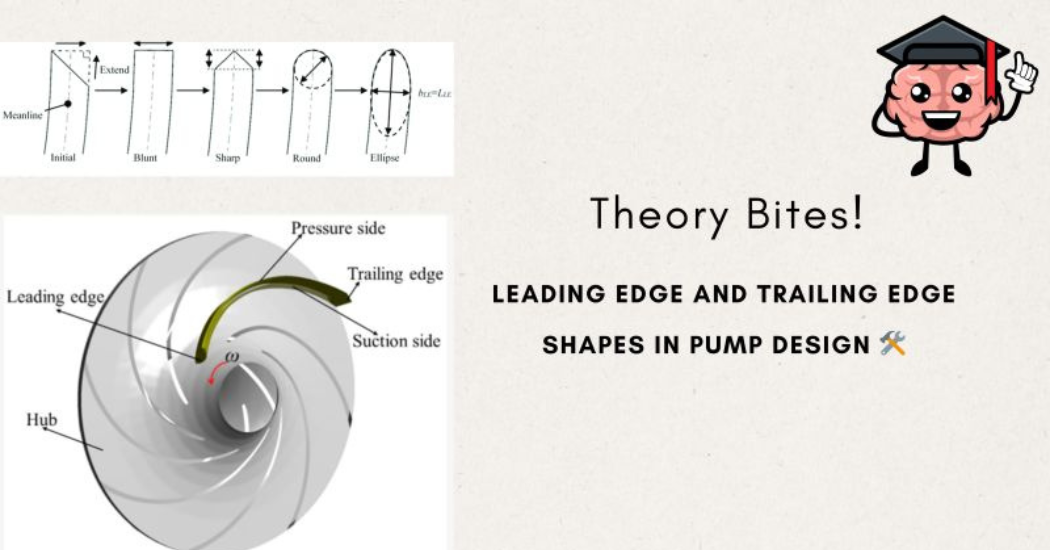
In pump impeller design, the leading edge (where fluid enters) and the trailing edge (where fluid exits) play pivotal roles in performance. Their shapes can significantly influence efficiency, cavitation resistance, and pressure pulsations.⁣

Leading Edge: A well-contoured leading edge ensures smooth fluid entry, reducing the risk of cavitation—a phenomenon where vapor bubbles form and collapse, potentially damaging the impeller. Studies have shown that impellers with a parabolic leading edge profile exhibit better cavitation performance compared to blunt profiles. ⁣

Trailing Edge: The shape of the trailing edge affects the wake flow and pressure distribution downstream. Research indicates that different trailing edge shapes can be used to adjust the energy loss proportions in various components of the pump, thereby influencing overall efficiency. ⁣

By optimizing both leading and trailing edge geometries, engineers can enhance pump performance, ensuring efficient and reliable operation across various applications.⁣

How have you approached leading and trailing edge design in your pump projects?

Read more Theory Bites from Maria Elena Rodriguez.
Related Articles

Related Whitepapers

Pump Maintenance Mistakes Checklist

A pump is an expensive piece of any water system. Maybe not the most expensive, but certainly not the least. However, only a small fraction…

Selecting the Right Bearings to Improve Vertical Turbine Pump Reliability

Selecting the Right Bearings to Improve Vertical Turbine Pump Reliability Vertical Turbine Pumps (VTPs) are available in a variety of configurations and are used for…

Torque Measurement Precision: Why the Overload vs. Overrange Distinction Matters for Quality Control

Why properly understanding and differentiating between overload and overrange helps to maintain the accuracy and longevity of the torque meter. Two easily overlooked, yet extremely…

Implementing Predictive and Prescriptive Digital Maintenance Technologies for Rotating Equipment

Business and operations systems are becoming increasingly integrated in the digital era. With accessible data and information, enhancing the business value of plants that utilize…