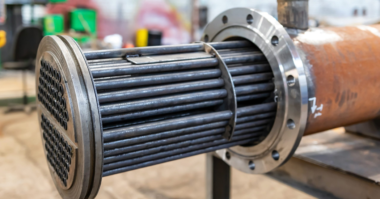
Before: Standard Sealing Creates Hidden Emissions Risks
As industries work toward net-zero emissions, technologies such as hydrogen production, CCUS, nuclear power, and alternative fuels depend on a critical factor: containment. Without reliable sealing, gases and fluids escape through valves, flanges, compressors, pipelines, and storage systems, leading to fugitive
emissions, product loss, and reduced operational efficiency.
In hydrogen systems, this challenge becomes even greater because hydrogen has an extremely small molecular structure, making it difficult to contain. Leakage can reduce the environmental benefits of hydrogen since released hydrogen acts as an indirect greenhouse gas with global warming potential.
In conventional oil, gas, and chemical operations, poor sealing increases methane (CH4) and volatile organic compound (VOC) emissions, creating compliance risks and increasing the overall carbon footprint of existing infrastructure.
After: Advanced Sealing Improves Reliability and Supports Clean Energy
Goals
Using advanced sealing solutions such as structured and expanded PTFE gaskets improves containment and strengthens decarbonization efforts. Gaskets like TEADIT® 24 SH provide high-quality mechanical strength and reduced creep, helping maintain long-term seal integrity under pressure, temperature, and chemical exposure in PEM and alkaline electrolyzers.
These improved material properties increase the efficiency and reliability of hydrogen production while supporting safer operation.
Low-emission valve packing and spiral-wound gasket designs also deliver leakage rates well below industry norms, reducing fugitive emissions from valves, flanges, and pressure vessels. This helps facilities reduce methane and VOC emissions, comply with strict environmental regulations, and operate more sustainably.
The Improvement
Before: Leakage increases emissions, wastes valuable process media, and weakens the environmental benefits of clean energy systems.
After: Reliable sealing improves containment, protects system performance, and helps industries move toward safer, cleaner, and more efficient operations.
Decarbonization is not only about new energy sources. It is also about ensuring every connection, every joint, and every system remains properly sealed.
To learn more about The Essential Role of Sealing Solutions in a Decarbonizing World, read the full article.