Hydrofluoric Acid (HF) is among the most aggressive and hazardous chemicals used in industrial processes. It is an extremely corrosive and toxic substance that poses serious risks to personnel and plant equipment.
Despite these hazards, HF remains essential in the production of refrigerants, plastics, pharmaceuticals, and high-octane gasoline in refinery alkylation units. Reliable containment is therefore a critical operational requirement.
Background: HF Alkylation Sealing Challenges
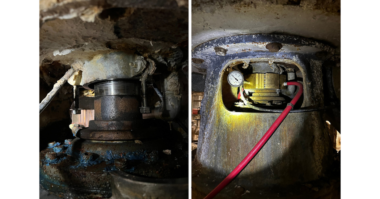
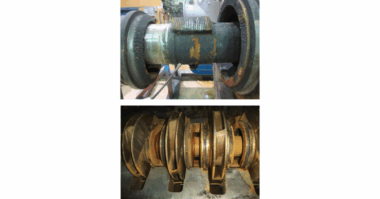
Refinery alkylation units commonly use either sulfuric acid or hydrofluoric acid as catalysts to produce high-octane gasoline blend stock. While HF alkylation is highly effective, it introduces significant safety, maintenance, and reliability concerns due to the chemical’s extreme corrosiveness. Even limited exposure to moisture can lead to the formation of HF acid and rapid flange corrosion.
Historically, refineries have relied on semi-metallic gaskets, such as spiral-wound and kammprofile designs. However, conventional gasket configurations often create crevice/void volumes at the flange inside diameter (bore side) that can trap process acid and drive localized corrosion, leading to unplanned maintenance and increased operational risk.
Key Insight:
Gasket designs that leave exposed flange surfaces (inside diameter) can create corrosion initiation points in HF service.
Solution: Dual-Seal Gasket Technology
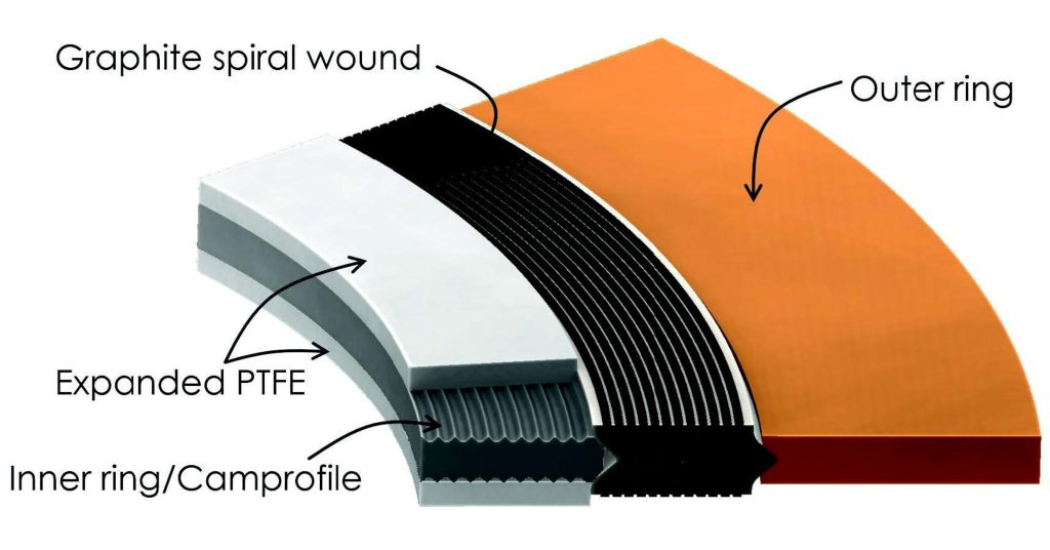
To address these limitations, TEADIT developed the Echelon™-HF gasket specifically for hydrofluoric acid applications. The gasket incorporates a dual-seal design intended to deliver both primary sealing performance and enhanced flange corrosion protection within a single assembly.
Primary Sealing Performance
The Echelon™-HF primary seal consists of a fire-safe, high-density winding made from alternating layers of flexible graphite and Monel® 400. This construction supports low-emission performance, maintains consistent sealing integrity over time, and contributes to extended service life with reduced maintenance requirements.
Key Insight:
Material selection and winding density are critical for maintaining sealing integrity and emissions performance in HF service.
Secondary Seal and Flange Protection
To address acid pooling at the flange inside diameter, the Echelon™-HF incorporates a Monel® 400 kammprofile inner ring faced with high-performance expanded PTFE (ePTFE). This secondary sealing element compresses effectively to form a continuous barrier at the flange ID, conforms to surface irregularities, and offers superior creep resistance through a proprietary ePTFE formulation with uniform density.
Key Insight:
Eliminating gaps at the flange ID is essential to reducing HF acid accumulation and corrosion risk.
Engineering Consideration: Stress Distribution
Integrating two sealing elements into a single gasket presents challenges related to gasket loading. A secondary seal that is too thin may not adequately protect the flange, while excessive thickness can interfere with primary seal loading. The Echelon™-HF is engineered to optimize stress distribution across both sealing surfaces so each component functions as intended without compromising the other.
Key Insight:
Balanced gasket stress is required to achieve both effective sealing and long-term flange protection.
Results and Industry Implications
Even advanced gasket designs must be supported by proper application practices. Effective HF sealing programs include training and procedures for installation verification, flange inspection and maintenance, torque control, specification management, retorque practices, and ongoing performance monitoring.
Key Takeaway:
Gasket performance depends on both product design and correct installation practices.
Through its dual-seal design, advanced material selection, and optimized stress distribution, the TEADIT Echelon™-HF gasket establishes a high standard for safety, reliability, and cost-effective HF acid containment in refinery alkylation units.