Spiral wound gaskets have been central to improving efficiency, safety, and emissions control for over a century. Understanding their evolution and how modern standards define their performance enables engineers to make better sealing decisions and ensure long-term asset reliability.
Lesson 1: Why Gaskets Matter
Spiral wound gaskets have evolved through more than a century of innovation. Their development reflects ongoing progress in efficiency, asset reliability, and emissions reduction; all critical to a net-zero future.
Key takeaway: Each improvement in gasket design supports both operational reliability and environmental goals.
Lesson 2: Historical Foundations, The Drive for Efficiency
In 1867, Babcock and Wilcox patented a water-tube boiler design. Rising boiler pressures revealed that effective seals were essential to reduce energy loss.
By 1912, engineers created the first spiral-wound gasket, alternating metal and soft filler layers to resist pressure and temperature.
Key takeaway: The spiral wound gasket emerged from the need to prevent leaks and conserve energy in early steam systems.
Lesson 3: Progressive Design (1912–1960s)
- 1930s: Added metal wraps and guide rings for strength.
- 1940s: Introduced soft-metal fillers and inner rings to prevent buckling.
- 1960s: Adopted new fillers such as PTFE and exfoliated graphite.
Key takeaway: Continuous material and structural improvements enhanced durability and sealing capability.
Lesson 4: Standardization and Safety
Early equipment and pressure failures across boilers, piping, and vessels drove the creation of design codes:
- ASME B16.5/B16.47 – Pipe flanges
- ASME B31.3 – Process piping
- ASME BPVC Section VIII – Pressure vessels
- ASME B16.20 – Metallic Gaskets for Pipe Flanges
Key takeaway: Gasket standardization paralleled the growth of modern safety and quality systems.
Lesson 5: Research-Based Innovation
Early B16.20 standards were purely dimensional, leading to inconsistent performance.
In 2011, TEADIT®’s Jose Veiga and Chevron’s David Reeves demonstrated that controlling winding density yields a tighter, more reliable seal.
Key takeaway: Consistent winding density prevents over-compression and ensures reliable sealing across all gasket sizes.
Lesson 6: Technical Overview
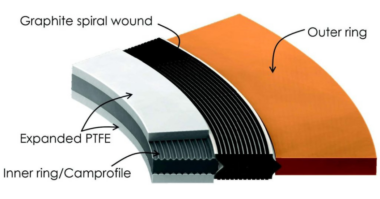
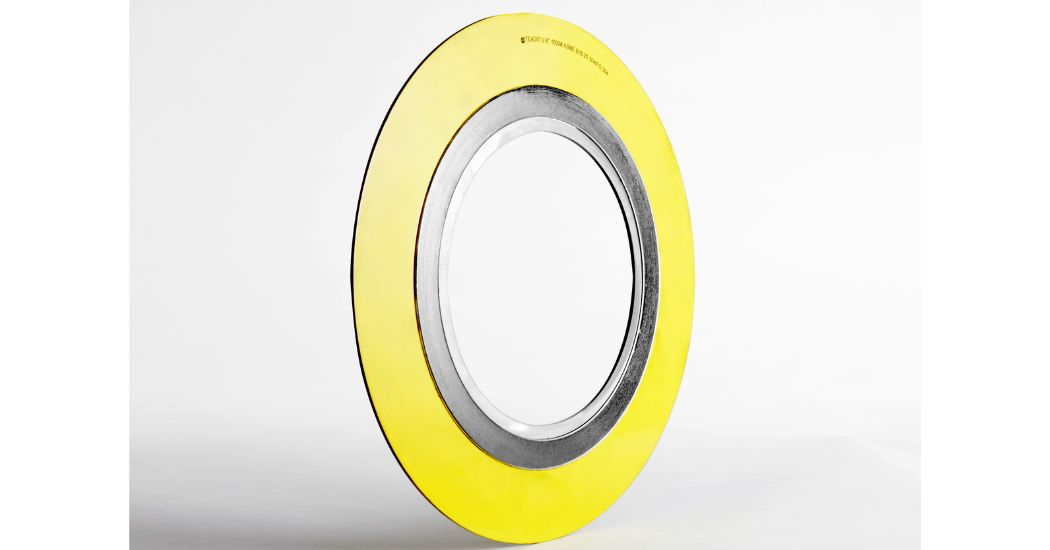
Modern spiral wound gaskets include:
- Wound sealing element: alternating metal and filler (commonly stainless steel and graphite).
- Inner and outer rings: for centering and reinforcement.
The 2017 B16.20 revision added:
- Minimum compressed thickness criteria under standardized testing.
- Performance-based leakage testing.
Key takeaway: The standard now verifies real-world sealing performance,
not just dimensions.
Lesson 7: Today’s Standards and the Future
ASME B16.20 (2017) introduced the first performance requirement for any type of gasket, defining spiral wound gaskets as low-leak technology. Facilities can now request performance data to demonstrate compliance with EPA and net-zero objectives.
Key takeaway: Modern spiral wound gaskets are central to achieving reliable, low-emission operations.
Final Reflection
From 19th-century boilers to 21st-century emissions compliance, the spiral wound gasket’s evolution illustrates how engineering progress drives safety, efficiency, and sustainability.
For more information, visit teadit.com.