1. ePTFE Gasket Tape Is Designed for Demanding Sealing Applications
Expanded polytetrafluoroethylene (ePTFE) gasket tape is manufactured from 100% virgin PTFE that has been expanded in one or multiple directions. This structure delivers excellent chemical resistance, low friction, and inert behavior, making it suitable for aggressive media as well as sensitive applications such as food and pharmaceutical processing.
2. It Excels Where Standard Cut Gaskets are Not Ideal
While one-piece cut gaskets are often preferred, ePTFE gasket-tape is especially effective when flange surfaces are irregular, space is limited, or shafts and stems pass through the flange. They are also ideal for very large flanges, where it is impractical to cut a gasket.
The tape conforms to uneven surfaces and can often be installed without removing internal components, reducing downtime and simplifying maintenance.
3. Mono-Axial and Multi-Directional Tapes Behave Very Differently
ePTFE tapes are available in mono-axial (Joint Sealant) and multi-directional (Gasket Tapes) forms. Mono-axial tape is expanded in one direction and is highly conformable, while multi-directional tape is expanded in multiple directions, providing greater strength and dimensional stability. Selecting the correct structure is critical to sealing performance.
4. Mono-Axial Tape Prioritizes Flexibility and Ease of Installation
Mono-axial ePTFE tape (Joint Sealant), such as Teadit 24B, spreads laterally when compressed and can increase in width by approximately 200 to 300%. This makes it easy to install in complex flange geometries and is adaptable to a wide range of sealing conditions. Proper sizing is important to account for this expansion under load.
5. Multi-Directional Tape Provides Strength and Dimensional Stability
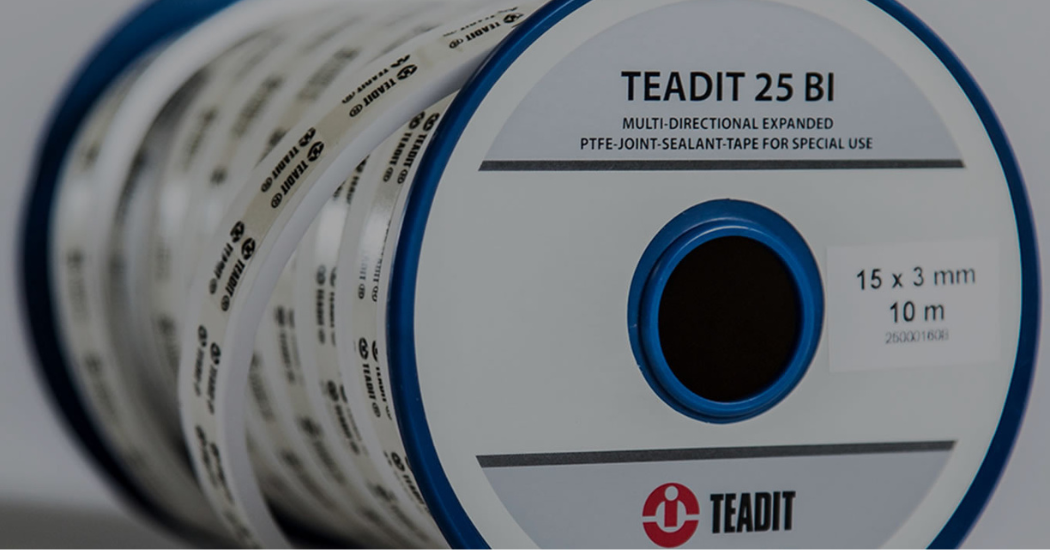
Multi-directional ePTFE tape (Gasket Tape), such as Teadit 25BI, maintains its width under compression and offers high tensile strength in both longitudinal and cross directions. This consistent compression behavior makes it well-suited for warped or uneven flanges, including glass-lined equipment, where layering and resistance to creep at higher temperatures are essential.
6. Installation Technique Directly Affects Sealing Performance
Although installation is relatively simple, correct procedures are critical. Joint sealant allows straightforward overlapping of the ends, while gasket tapes requires skived joints and staged bolt tightening to prevent gaps. Following recommended installation guidelines ensures reliable sealing, improved service life, and reduced maintenance.
Bottom Line
Expanded PTFE tapes are a versatile sealing solution for challenging applications. Joint Sealants, or mono-axial tapes, offers flexibility and fast installation, while multi-directional tape, or gasket tape, delivers strength and stability where dimensional control matters most. Understanding these differences helps engineers and maintenance professionals make informed sealing decisions that improve reliability and safety.
To learn more about which solution is best for your application, read the full article!