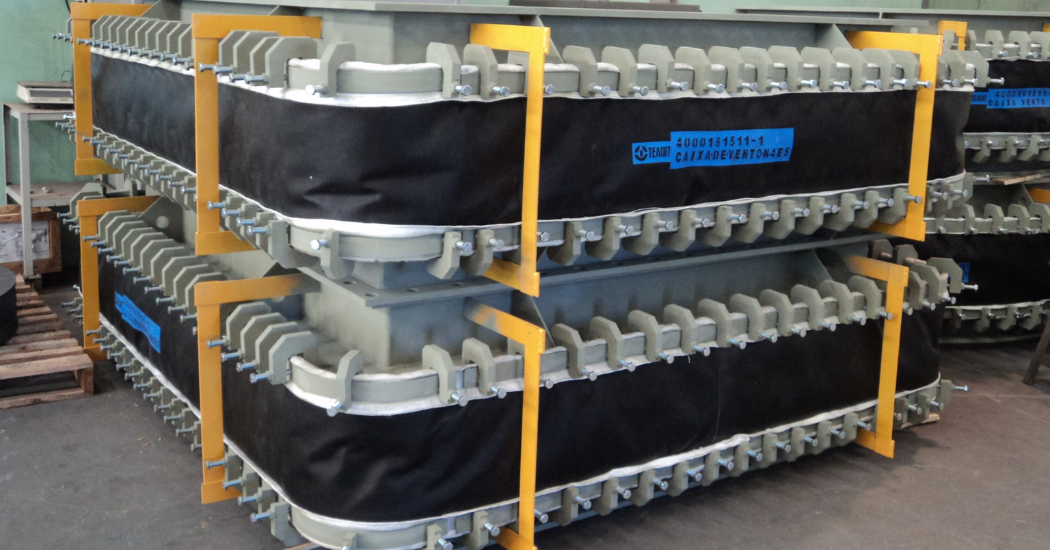
Fabric expansion joints are critical components in flue gas and air systems across industrial plants. They help manage thermal movement and absorb vibration, all while maintaining system integrity. Here are five key insights every engineer or maintenance personnel should know!
1. Know the Key Selection Factors
When specifying a fabric expansion joint, six technical factors must be rigorously analyzed. Choosing the right fabric expansion joint starts with understanding the system:
- Temperature range: Select materials that handle expected heat levels. Materials must retain flexibility and mechanical integrity at continuous operating temps (up to 2192°F / 1200°C), with short-term spike tolerance.
- Movement: Joints can be designed to absorb axial, lateral, and angular movements. Additionally, compared to a metallic expansion joint, fabric joints have the advantage of absorbing a greater range of movement.
- Detailed system analysis is required to quantify expected thermal growth, dynamic vibration, and seismic displacement.
- Chemical resistance: Materials must withstand the application’s process gases.
- Environmental exposure: Corrosion resistance matters. UV, moisture, and atmospheric contaminants must be considered. Outer cover layers often require UV-resistant or weatherproof coatings.
- Installation needs: Field-assembled or pre-built? Evaluate duct geometry, access limitations, and field assembly conditions. Field-welded frames or pre-assembled joint modules may be required.
- Reference Technical Guidebooks: Refer to FSA Handbook for technical support.
Pro tip: Work with experienced manufacturers to match the right joint to the application.
2. Materials Matter
Fabric joints are multi-layered structures made of high-temp, chemically resistant materials like:
- Fiberglass fabric impregnated with PTFE.
- Fiberglass fabric coated with silicone.
These materials balance flexibility and durability, especially in harsh environments. Custom combinations are often necessary for severe conditions.
3. Smart Installation = Long Life
Installation plays a major role in performance. Typically, fabric expansion joints fall into two structural categories: flanged vs. belt. The type used affects the replacement ease and cost.
- Flanged Design
- Lower cost, compact installation
- Typical in systems with moderate thermal cycling
- Allows independent belt replacement without dismantling the frame
- Belt-Type Design
- Support flanged, welded, or bolted connections
- Better for high-service-factor applications
Pro tip: For high-velocity flow applications, use inner sleeves to provide protection, apply insulation pillows, (bolster bag or cavity pillow), and cuffs to control particulates and thermal load, and ensure proper fit of external duct insulation and backup bars. A well-installed joint reduces downtime and maintenance costs.
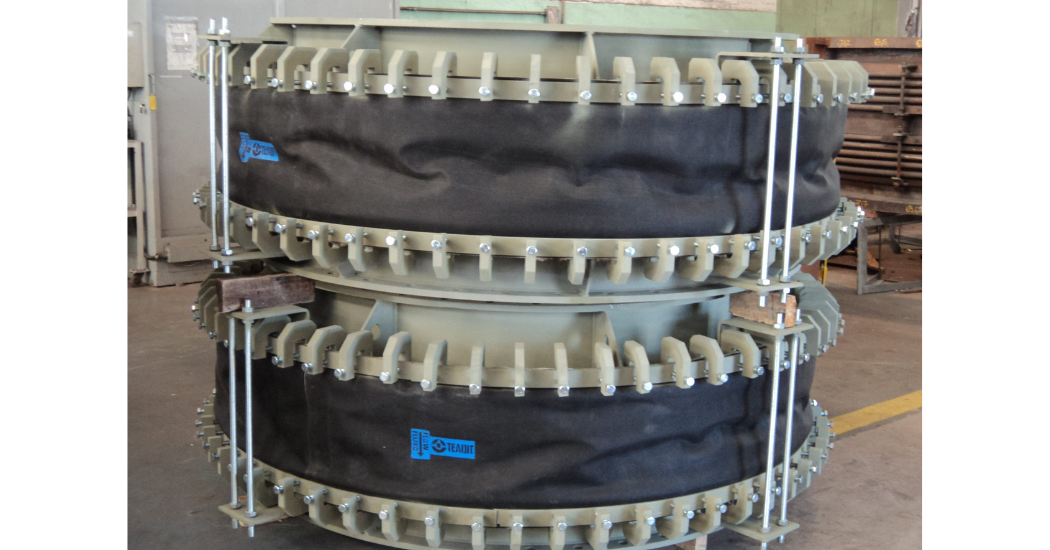
Teadit fabric expansion joint
4. Sealability is Critical
Fabric expansion joints, while inherently gas-permeable, are engineered to minimize leakage when made with the correct material and frame interface design. Ensure joints are tightly sealed to prevent:
- Air pollution
- Flow disruption
- Health hazards
Pro tip: Supplement the bellows’ seal if needed and inspect seals regularly.
5. Maintenance Is Not Optional
Even the best expansion joints degrade over time. Ignoring wear can lead to costly failures and downtime. Regular checks should include:
- Visual inspections for discoloration or hot spots
- Thermographic Scans to identify uneven heat distribution or premature material fatigue
- Movement tests and alignment verification
- Replacement of worn components
Pro Tip: Always retain service records including installation torque values, material certifications, and inspection notes. Use this data to optimize maintenance intervals.
Final Thought
By understanding material selection, installation best practices, and maintenance needs, a facility can ensure the safe, reliable, and efficient operation of its duct systems. Fabric joints should be treated as precision components, not just flexible connectors.
To learn more about the key aspects of fabric expansion joints, read the full article! Reach out to the expansion joint experts at TEADIT® to find the right solution for your application.
Read the full article.