Standard Outlines Practices to be Followed to Maintain Motor Reliability and Efficiency
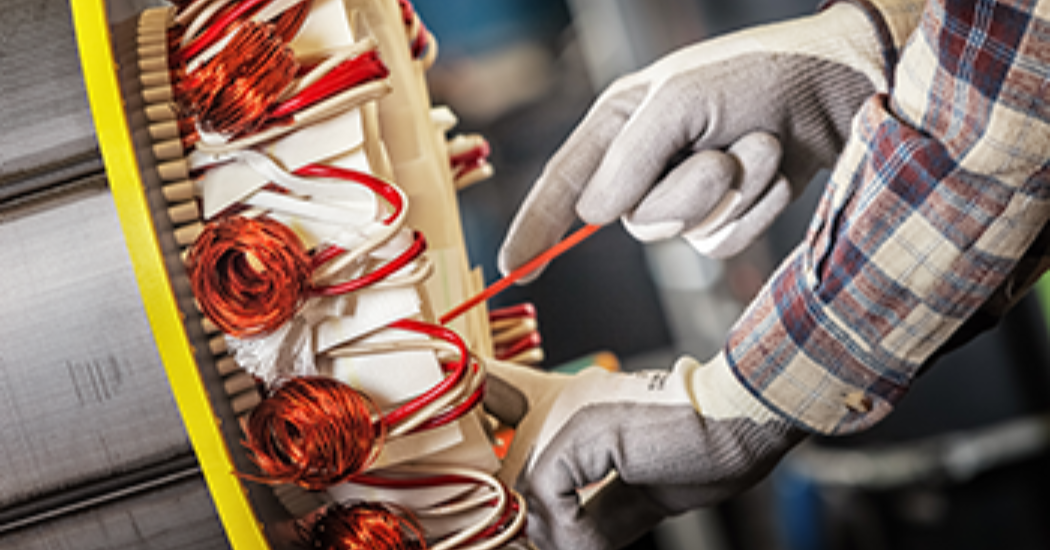
An updated edition of the only American National Standard for repair of motors and generators – ANSI/EASA AR100-2025: Recommended Practice for the Repair of Rotating Electrical Apparatus – was recently published for use by the repair industry and its customers. The standard describes industry best practices for the repair, rewinding and testing of electrical apparatus, which maintains or enhances the energy efficiency and reliability of AC and DC motors and generators.
ANSI requires that standards be reaffirmed or re-approved at least every five years and recently approved the AR100-2025 edition of this standard. The revision introduced new requirements, provided new good practice methods, added or tightened performance tolerances in several critical areas, and expanded testing procedures. The revision introduced separate runout tolerances for 2 pole and for 4 or more pole machines, added the wet winding method to stationary coils to indicate it is also a treatment option and added information and guidance regarding magnetic wedges. Additional information was added to the phase balance test section to provide specific test parameters for the level of voltage to be applied and the time duration. Finally, guidance was provided for test running a motor when rated frequency is not available.
“Since ANSI recognizes only one standard on a topic, EASA’s ANSI/EASA AR100 is the standard for repair of rotating electrical equipment. End users should ensure their service centers are repairing in accordance with EASA AR100-2025 to be assured of receiving quality repairs that maintain reliability and efficiency,” said Linda Raynes, CAE, EASA President and CEO.
The Recommended Practice may be downloaded at no cost from EASA’s website at easa.com/erc. Printed copies of the updated edition are also available for purchase at easa.com. EASA is an international trade organization consisting of more than 1,700 electromechanical sales and service firms in nearly 70 countries. EASA provides engineering support, education and a variety of technical, management and sales/marketing programs related to sales, service and maintenance of motors, pumps, generators and other electromechanical equipment.