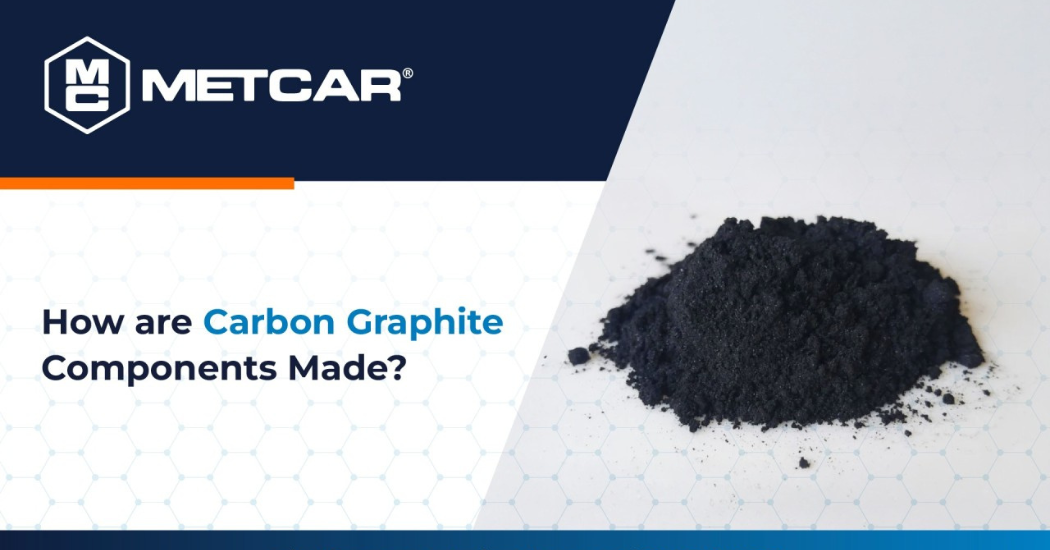
Metcar’s carbon graphite components don’t come to life by chance. Behind every ring, plate, or custom part, there’s a tightly controlled manufacturing process that transforms raw materials into solid, reliable, and durable components capable of performing under extreme conditions.
But how does this transformation happen? Here’s a simple breakdown:
- Precise Material Blending (Batching): It all starts with a specific blend of carbon, graphite, and binders. This formula varies depending on the final application, aerospace components aren’t the same as those for submersible pumps. During this step, we control the ratio, grain size, and consistency of the base material.
- Molding: Once the powder is mixed, it’s shaped into the desired form through pressing or extrusion. This creates a “green” (unsintered) part that doesn’t yet have its final strength, but already has the basic geometry.
- Sintering: The molded pieces are heated to temperatures up to 1,000 °C or higher in an oxygen-free, controlled furnace. This step—also known as baking—removes the binders and strengthens the structure by increasing density and cohesion.
- Impregnation (Optional): Some parts go through an impregnation process using resin or metal, depending on the application. This enhances properties like corrosion resistance, lubricity, or mechanical strength. Here’s where Metcar adds its unique value, with proprietary formulations tailored for performance.
- Final Machining: After sintering and impregnation, the parts are machined using diamond tools to meet final tolerances and surface finishes. This step demands micrometric precision, especially for mechanical seals and critical components.
- Quality Inspection: Each part goes through rigorous checks to verify dimensions, porosity, hardness, and other key properties. That’s how we ensure every component performs reliably in demanding environments.
Why Is This Process So Important? Because it determines whether Metcar’s materials will deliver long life, consistent performance, and efficient operation. In industries where maintenance isn’t frequent, such as aviation, energy, or industrial processing, Metcar’s clients need components that simply work.