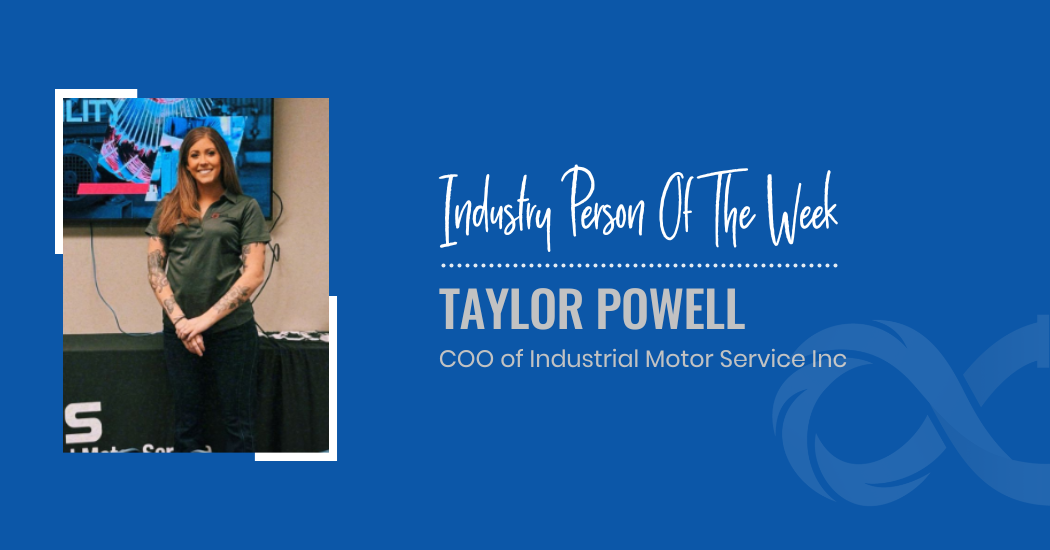
Meet our Industry Person of the Week, Taylor Powell, COO of Industrial Motor Service Inc.
Q: How did you get started working in your field?
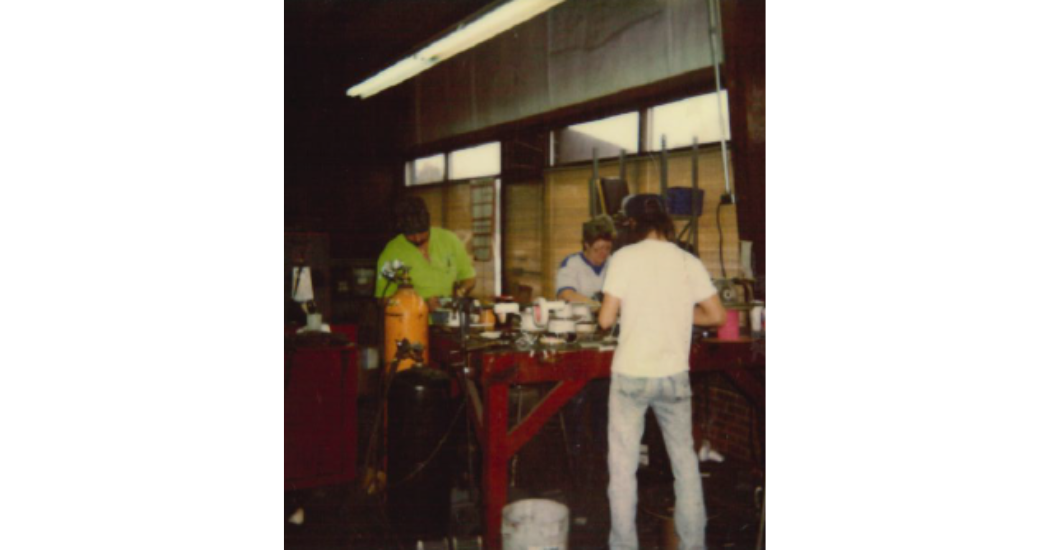
Taylor: I got started by following in my dad’s footsteps, although it wasn’t something I ever planned. My dad didn’t inherit the business—he earned it. At 18, he was recommended by the unemployment office and started as a motor winder. He didn’t know anything about the industry when he walked in, but he worked hard, learned fast, and found his passion in the technical side of electric motors. Over the years, he worked his way up to buy the company. I watched that kind of work ethic growing up, but it didn’t mean I thought I’d be part of it myself.
 I had dropped out of college because I wanted to work and not just sit in a classroom. I needed something more hands-on, something that challenged me. I took a job at Chick-fil-A, where I started as a cashier and quickly moved into their leadership track. Their leadership development program gave me a real foundation in how to train people, how to build team culture, and how to lead under pressure.
Around that time, my dad needed help at the business. He needed someone to manage the office, and I stepped in thinking it would be temporary—just a way to help out. I didn’t expect to stay long. But once I got inside, I started seeing problems I wanted to solve. I realized there were no playbooks, no training manuals, no real way for someone new to learn the ropes unless they knew the right people or asked the right questions.
The more I leaned into the work, the more I saw just how powerful and overlooked our industry really is. Everything in the world runs on motors, yet hardly anyone talks about how to maintain or manage them. There’s no degree path for this. No one teaches it. I stopped trying to find the resources I thought I needed and started documenting the tribal knowledge that was already here. What used to frustrate me became the most valuable thing we had. Now, I spend my time turning that invisible knowledge into tools, systems, and education—for our team and for our customers.
Q: What do you love the most about your job? What are you most proud of?
Taylor: What I love most is that I get to be a builder. I build systems, I build leaders, I build trust. I get to walk into messy, chaotic situations and bring clarity. That’s what makes me feel alive. Every day is different, but the purpose is the same—make things better than they were yesterday.
But more than that, I get to be part of building a new kind of team. I stopped hiring based on resumes or experience. Instead, I started looking for people who had what I call “the sparkle”—that hunger to learn, that fire to do something meaningful. That’s how I started, and now I’ve built a team full of people who never thought they’d work in a motor shop either.
What makes me most proud is what they’re doing with that opportunity. My project manager is developing apps for diagnostics, inventory management, and preventive maintenance—things that are redefining what modern electric motor repair looks like. My accounting associate isn’t just balancing books—she’s 3D printing obsolete parts to get our customers back online faster. My executive assistant is transforming our supply chain by building real vendor relationships and helping us drive circular economy practices that actually work. These women are not only thriving—they’re innovating.
And in a traditionally male-dominated industry, that means something. When I started, only 10% of our team was female. Now, that number is 25%, and growing. I didn’t hire women to meet a quota. I hired top-tier talent who happened to be women. They’ve proven that women belong in this space, and not just in support roles—they belong in leadership, innovation, and strategy.
So when I say I’m proud, I mean it. I’m proud that we’re changing the face of an industry. I’m proud that I get to mentor women who are now mentoring others. And I’m proud that we’re not just reacting to change—we’re driving it.
 Q: What advice would you give to someone considering this line of work or new to the field?
Taylor: Don’t underestimate this industry just because no one talks about it. The trades are full of opportunity if you know where to look. And this field in particular—electric motor repair, preventive maintenance, reliability—it’s the backbone of every major operation you can think of. Without us, nothing runs.
So if you’re new, ask questions. All of them. Find the people who’ve been doing it for decades and just listen. Most of what you need to know won’t be in a book. It lives in the minds and hands of people who’ve spent a lifetime figuring it out. But that knowledge is worth gold.
Also, if you’re a woman reading this—we need you. We need your perspective, your leadership, your voice. Don’t let anyone tell you there isn’t a place for you in industrial work. There absolutely is, and it needs to be bigger. We’re rewriting the norms every day, and we need more people who are willing to step into that space.
Leadership isn’t about having the most experience. It’s about being the one who steps forward when something needs to change. If something doesn’t exist, build it. If something doesn’t make sense, fix it. You don’t need permission. You just need purpose.
 Q: Can you talk about a project you recently worked on?
Taylor: There’s one project I’ve been working on since the day I started, even if it didn’t have a name yet. We’re digitalizing our shop—not just for the sake of technology, but because our customers need more than just repairs.
For years, I paid attention to the way customers leaned on us. They didn’t just drop off motors for repair. They relied on our judgment, our tracking, our internal notes. Why? Because no one else was helping them connect the dots. They didn’t have the right data. They didn’t understand the patterns. Their maintenance teams and procurement teams rarely spoke the same language. And the consequences? Downtime, waste, missed opportunities.
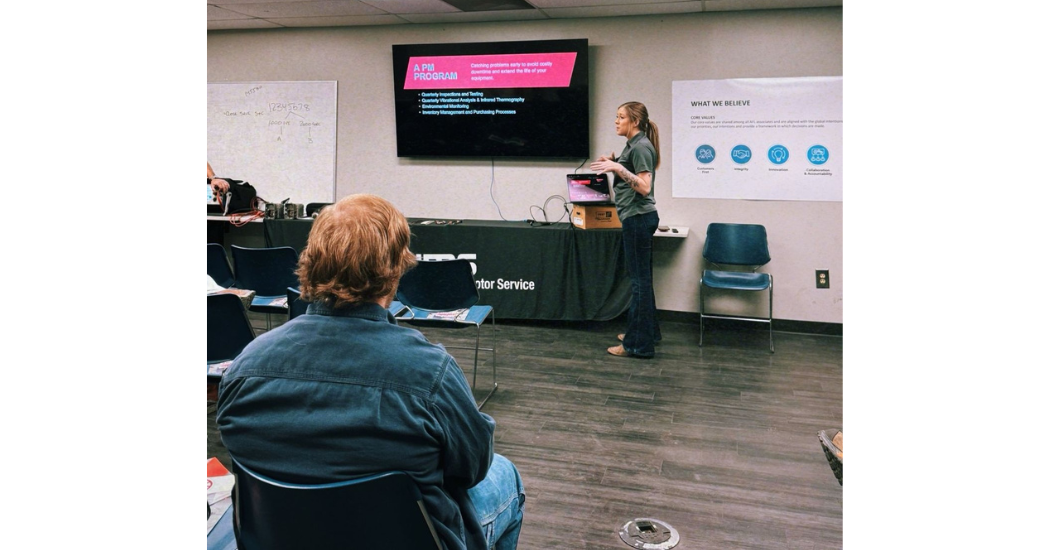
So we started building something different. A consulting-forward approach, built on the foundation of our repair data. We don’t just say “this motor failed.” We show them why. We tie it back to maintenance schedules, operating conditions, and spending patterns. We help facilitate conversations between departments that haven’t traditionally worked together. We educate, we advise, and we connect the dots that no one else is connecting.
My dad brings decades of technical experience in maintenance. I bring the operational and procurement side. Together, we understand what it looks like to actually live inside a plant, to feel the pressure of downtime, and to know what needs to happen next. We speak their language.
It’s helping people make smarter decisions using what they already have. It’s preventing the panic calls. It’s teaching manufacturers how to finally take control of their motor inventory, plan replacements before crisis hits, and reduce wasted spend.
We’re not just selling repair services anymore. We’re helping our customers rethink how they operate. That shift has taken years of groundwork, but now we’re watching it come to life.
Q: Anything else you would like to add?
Taylor: The future of this industry depends on the stories we tell, the systems we build, and the people we invite in. If you’re reading this and think you don’t belong here, think again. There is space for thinkers, builders, fixers, teachers, and dreamers. This industry needs all of us.
And if no one has ever told you this field is worth investing in—I will. It is. It’s full of hidden complexity, untapped potential, and real-world impact. We’re not background noise. We’re the reason things keep moving. And if you’re willing to step in and ask the hard questions, there’s no limit to what you can build here.
Connect with Taylor on LinkedIn.
THANK YOU, TAYLOR! WE LOOK FORWARD TO KEEPING UP WITH YOU THROUGH THE #PUMPTALK COMMUNITY!