As pump users deal with supply chain issues and put a greater emphasis on sustainability, Hydro Inc says re-engineering is an increasingly attractive alternative to buying new.
Changes in process flow requirements can force end users into a situation where the installed equipment can no longer meet the design flow conditions. In these cases, many end users will turn to purchasing new equipment and send the original pumps to the proverbial pump “bone yard.” However, a strained supply chain and greater focus on sustainability are making many equipment owners rethink this decision. Many are finding that re-engineering existing equipment instead of defaulting to the “buy new” mentality not only saves them time and money, but it can result in a more reliable and efficient pump.
We often operate under the theory that new is better, but that is not always the case. Beyond the first cost of the initial purchase, there are many hidden risks that can increase equipment total cost of ownership. Working with a qualified aftermarket partner to re-engineer a pump provides greater influence over the final product than an “off the shelf” pump purchase. Some of these advantages include a more precise match of the hydraulics to the design condition, tighter control of tolerances for a more robust piece of equipment, and lower risk of delivery delays due to a less complex local supply chain.
Additionally, while many assume that technological advances are inherently available in new equipment and not applied during refurbishments, re-engineering an existing design provides a much greater guarantee that these advances will be applied. This is because it takes the process away from being a transaction- where an existing design is purchased- and turns it into an interaction between a team of experienced engineers and the equipment owners. By bringing the equipment focus back into the eyes of an engineering team, a critical mindset can be applied to ensure that the design and materials are optimized for the actual service.
The benefits of re-engineering an installed asset instead of purchasing a new pump were recently realized by a major Gulf Coast refinery. The refinery had several single-stage overhung process pumps that were unable to meet increased system requirements. Concerns about lead times for new equipment, worsened by global supply chain difficulties, made replacement of these pumps a risky, and costly, proposition.
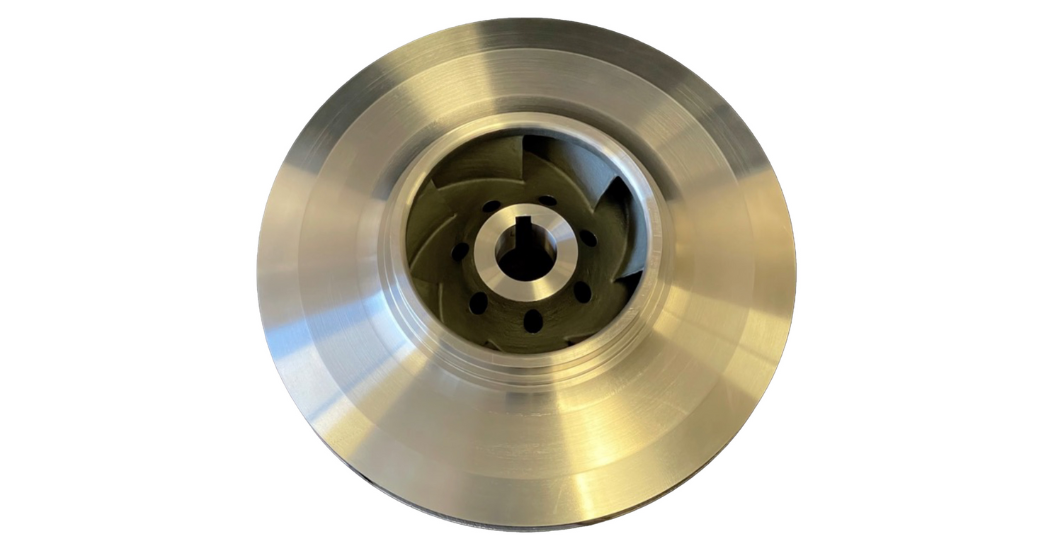 Fortunately, the team at Hydro’s Houston area Golden Triangle service center was able to engineer a solution that significantly reduced both the risk of production delays and overall cost. They achieved this while providing a reliable piece of equipment that successfully met the new performance requirements and was built to higher standards than what is usually provided out of the box by the OEM. In completing the project they leveraged not only their local engineers and global engineering team, but their Parts Solutions division and certified pump test lab. Access to these additional capabilities allowed them more control over parts production and the ability to verify the theoretical performance in a laboratory environment prior to installation.
Instead of providing an entirely new piece of equipment, the hydraulics of the existing pumps were modified to meet the target head and flow. The first step in this process was to reverse engineer the hydraulic components- the pump casing and impeller. To reduce the risk of having the equipment off-site, these components were reverse engineered in the field by Hydro’s dedicated reverse engineering specialists. The data captured during the reverse engineering process was used to create verified 3D models of the existing components. These models were then provided to the Global Engineering division to perform the hydraulic redesign. This redesign was accomplished using a combination of hydraulic design knowledge and computational fluid dynamics (CFD) expertise.
An important focus in the redesign was achieving the required performance at optimal efficiency. This is in contrast to many equipment purchases where a pump is selected from an existing OEM line. In that situation, an application engineer selects a model from an established hydraulic design that is close to the specified requirements. When doing a custom redesign, the impeller and casing are modified to meet the design operating point more exactly and efficiently.
Matching the pump to the system provides much more than just the energy savings benefit of operating at the peak efficiency. As operation moves away from the best efficiency point, reliability and life suffer. In fact, analysis using extensive empirical data has shown that moving from operation within -10/+5% of BEP to operation within -20/+10% of BEP decreases reliability from a a factor of 0.92 to a factor of 0.53. (Figure 1 goes here) Because of this, a custom-engineered rerate provided not only reduces first cost, but provides sustainable maintenance and operations cost reduction through increased reliability and longer mean-time-between-repair (MTBR).
When the engineering team had developed a design that was able to meet the new conditions at peak efficiency, the new component specifications were sent to Hydro Parts Solutions to produce the components. The specialists in the parts division have in-depth experience with casting design and have fostered strong relationships with local foundries that allow them to oversee the casting of the parts locally. This provides them with the opportunity to ensure quality of the pour, identify potential problems quickly, and greatly reduce risk to extended lead times.
The Parts Solutions division designed the casting package, oversaw casting of the parts at a Gulf Coast foundry, and provided the final machining of the components. The new parts were provided with parts numbers to allow easy sourcing in the future. In parallel with the manufacture of the casing and impeller, the service center performed a refurbishment of the reusable pump components and brought the equipment into best-in-class tolerances.
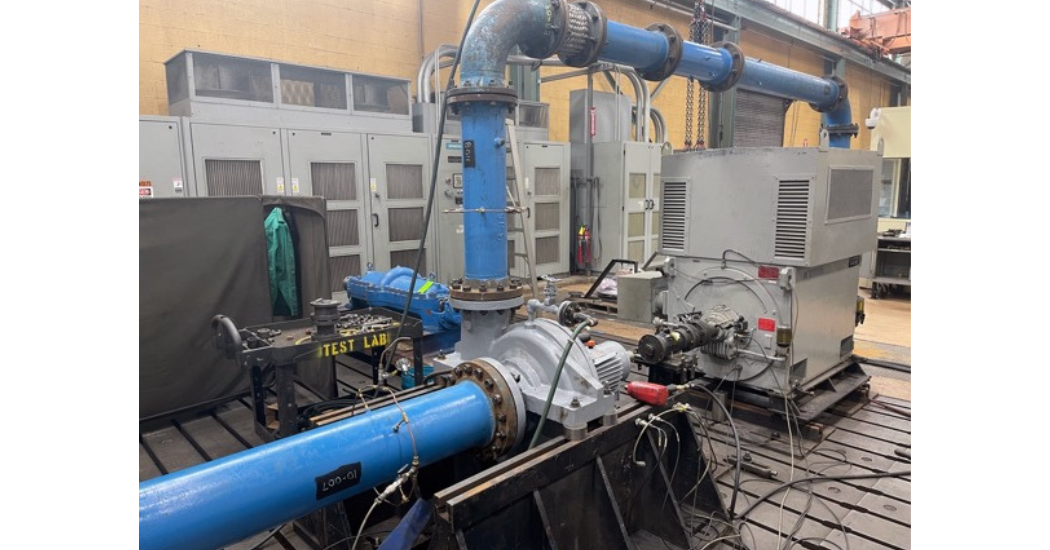
The final step in the process was providing a certified performance test of the first rerated pump at Hydro’s Performance Test Lab in Chicago. This test verified that the new design met the hydraulic and mechanical requirements of the site. It also established a certified pump performance curve to replace the original curve supplied with the equipment.
Upon installation at the refinery, the new pumps successfully delivered the required system output. By leveraging their experience with complex pump repair and using the diverse resources of the Hydro global network, HydroTex Golden Triangle was able to provide the refinery with optimized performance at a fraction of the lead time and cost of purchasing a new piece of equipment.
As we become more mindful of the costs of replacement–in monetary investment, time, and environmental impact–the approach of buying new should be reconsidered and the idea of re-engineering vintage equipment should be recognized as an increasingly attractive alternative.
Published in World Pumps Magazine