In today’s rapidly evolving industrial maintenance profession, maintaining the health and longevity of critical assets is paramount. Traditional methods of condition monitoring, while effective, often come with limitations such as manual data collection, wired setups, siloed information, and high maintenance costs. Enter wireless condition monitoring—a technology that is revolutionizing asset health management. Wireless condition monitoring effectively harnesses emerging technologies and connects them to experienced subject matter experts to provide unique benefits. This article explores how wireless condition monitoring has transformed asset management and maintenance and provides a real-world example to demonstrate its impact.
The Evolution of Condition Monitoring
Condition monitoring has been a cornerstone of predictive maintenance strategies for decades. Traditionally, these systems relied on wired sensors and manual data collection processes. However, with the advent of wireless technology, the landscape of condition monitoring has changed drastically. Wireless condition monitoring enables continuous, real-time data collection and analysis, allowing for proactive maintenance strategies that minimize downtime and extend the life of critical assets.
Unique Benefits of Wireless Condition Monitoring
- Scalability and Flexibility Wireless condition monitoring systems offer greatly improved scalability. Unlike wired systems, which require extensive infrastructure and cabling, wireless sensors can be easily deployed across a wide range of assets without the need for significant modifications. This flexibility allows companies to monitor assets in remote or hard-to-reach locations, where traditional wired systems would be impractical or cost-prohibitive.
- Real-Time Data and Analytics One of the most significant advantages of wireless condition monitoring is the ability to collect and analyze data in real time. This continuous stream of data enables organizations to detect anomalies and problematic trends before they escalate into critical failures. Advanced analytics, powered by machine learning algorithms that enable pattern recognition, can quickly sort through vast expanses of data, predict potential issues, and provide
actionable information that can be further qualified by human experts. These real-time analytics allow maintenance teams to address emerging problems proactively and approach them with a clear roadmap to validate or refute suspected event drivers. - Reduced Installation and Maintenance Costs The absence of wiring and the ease of installation make wireless condition monitoring systems more cost-effective than their wired counterparts. Maintenance costs are also significantly reduced, as there is no need to manage and maintain extensive cabling infrastructure. Additionally, wireless sensors are typically designed with low power consumption, ensuring long battery life and minimal maintenance requirements.
- Improved Safety and Accessibility Wireless condition monitoring enhances safety by reducing the need for manual inspections in hazardous or inaccessible areas. Maintenance personnel can monitor asset health remotely, minimizing the risk of accidents and ensuring that safety protocols are followed. This remote monitoring capability is particularly valuable in industries such as oil and gas, mining, and utilities, where assets are often located in challenging environments. Wireless condition monitoring can also alert workers to potentially unsafe environments by providing notice of equipment anomalies that could signal a hazardous condition.
- Enhanced Data Integration and Accessibility Wireless systems are designed to integrate seamlessly with existing asset management and enterprise resource planning (ERP) systems. The data collected by wireless sensors can be accessed from anywhere, at any time, via cloud-based platforms. This accessibility ensures that decision-makers have the information they need at their fingertips, enabling faster and more informed decisions. By providing remote access to monitored data, information can be communicated more widely to engage a larger group of internal and external experts.
 Case Study: Wireless Condition Monitoring in Action
To illustrate the tangible benefits of wireless condition monitoring, let’s explore a real-world example from the oil and gas industry.
The Challenge
A remote pipeline pump station operator faced challenges in monitoring the health of critical rotating equipment, such as pumps and compressors. The harsh environment, coupled with the remote location, made traditional wired condition monitoring systems impractical. The operator needed a solution that could provide continuous monitoring, reduce maintenance costs, and ensure the safety of personnel.
The Solution
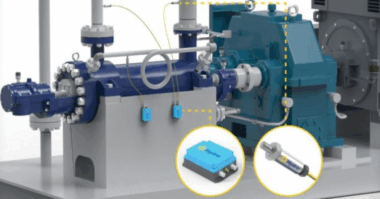
The operator implemented a wireless condition monitoring system, deploying wireless vibration sensors
on critical assets across the critical large horsepower pumps. These sensors were connected to a cloud-based platform that provided real-time data analytics and predictive maintenance insights. The system was also integrated with the operator’s existing asset management software to optimize data flow, incorporate other process data, and improve decision-making.
The Results
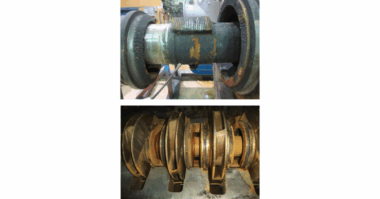
Within months of implementing the wireless condition monitoring system, the pipeline team experienced significant benefits. Downtime was reduced when the system detected early signs of bearing wear in a critical pump, allowing the maintenance team to replace the bearing before a catastrophic failure occurred. This proactive intervention prevented an estimated $500,000 in lost production due to unplanned downtime.
The wireless system also eliminated the need for costly and time-consuming manual inspections. Maintenance costs were reduced by 30%, and the operator avoided the expense of installing and maintaining a wired monitoring system in a challenging environment. Finally, the ability to monitor equipment remotely minimized the need for on-site visits, reducing exposure to falls, fires and other hazardous risks.
Conclusion
Wireless condition monitoring is transforming the way industries approach asset health management. Its unique benefits—scalability, real-time data, cost savings, safety enhancements, and seamless integration—make it an invaluable tool for maintaining the health and longevity of critical assets. As demonstrated in the oil and gas industry, the implementation of wireless condition monitoring systems can lead to significant operational improvements, cost reductions, and enhanced safety. As technology continues to advance, the adoption of wireless condition monitoring is set to become a standard practice across industries, ensuring that assets remain in peak condition and operations run smoothly.
About the Author
ROBERT MCCOWAN, Strategic Accounts & Business Development Manager, Hydro, Inc.