When a steel mill in Pennsylvania experienced repeated failures of its descaling pumps, a global aftermarket service provider was brought in to determine the root cause of the failure and provide
engineered upgrades to significantly extend the mean time between repair (MTBR).
The decision to seriously address the continued failures was cemented when a recently repaired 10-stage descaling pump failed upon start-up. This latest of five back-to-back failures caused the mill to struggle with making production, placing it on the verge of shutting down.
Despite the urgent nature of the repair, the mill was determined not to cut corners and risk suffering another pump failure. They recognized that the repeated “repairing-in-kind,” where the pump was returned to the original condition without addressing the root cause of the failures, was the reason that they were struggling with low reliability and high risk to production. By engaging an experienced aftermarket service provider with a dedicated engineering team, the mill committed itself to correcting the design defects and building a more reliable piece of equipment.
Ultimately, the forensic analysis provided by the aftermarket service provider identified several material and assembly issues that were affecting pump life. Applying state-of-the-art technology, they were able to not only increase reliability, but also reduce damage and realize energy savings over the life of the pump.
The Challenges
The mill was faced with several challenges when confronted with repairing and improving the failed descale pumps. First, they needed to quickly turn around two of their five pumps to avert a plant shutdown. This timeframe would be difficult to achieve while still providing the analysis and engineering changes required to improve reliability.
Secondly, the poor repairs and repeated failures originated in the OEM repair facility. Having lost faith in the quality and knowledge of this repair shop, the mill was faced with finding a non-OEM service provider that had sufficient experience and engineering capability to identify the problems and provide a targeted solution.
Fortunately, the local aftermarket service provider that they ultimately selected as a partner had a long history in the steel industry and was known for providing engineered upgrades for descale pumps. This service center was well-equipped to analyze and address component incompatibility and design/material defects.
Because of the severity of the situation, the aftermarket service provider mobilized their field service team and was onsite within 16 hours of receiving the call from the mill. To meet the repair schedule,
the service center salvaged useable parts from two of the pumps. With this method, they were able to get one pump repaired and returned to the plant in just four weeks. The remaining pump was back in operation within six weeks, allowing the steel mill to avoid interrupting production and incurring the cost of a shutdown.
The Forensic Analysis
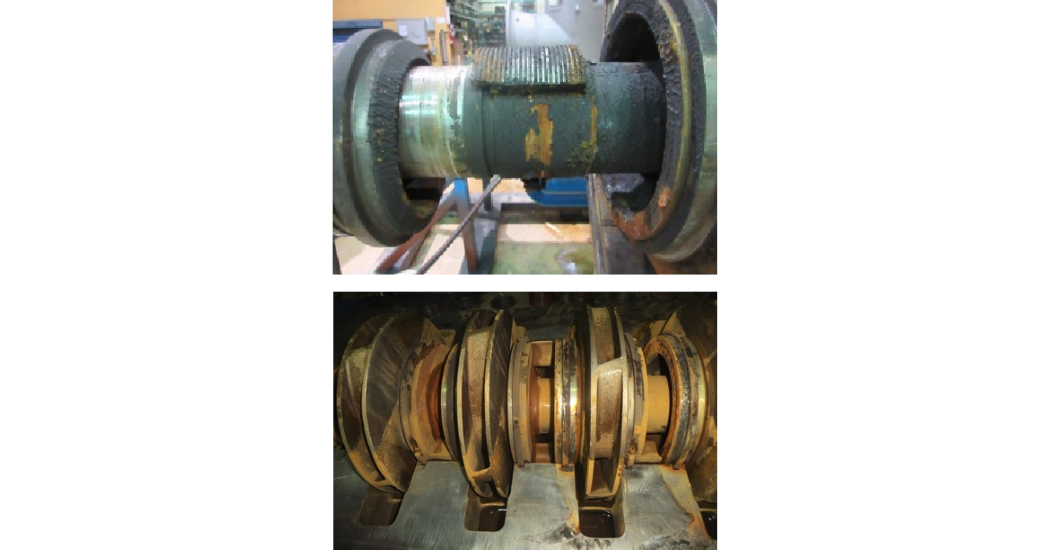
When sending a pump out for repair, the assumption is that there will be very little chance of failure upon start-up when it is returned. Unfortunately, this was not the case for the pumps in question. When the aftermarket service provider’s reliability engineer found extensive internal damage upon pump disassembly, an engineering study and detailed Engineering Forensic Analysis (EFA) was requested by the plant.
Forensic engineering is the application of engineering principles to the investigation of failures or other performance problems. Forensic engineering also often involves testimony on the findings of these investigations before a court of law or another judicial forum, when required.
During the inspection of the first failed pump, it was discovered that one of the impeller rings had broken loose and passed through the pump. The failed wear ring caused significant internal damage. Analysis of the ring led the service center to conclude that the wear ring was improperly heat treated. If heat treating is not performed correctly, it can leave the ring brittle and overstressed.
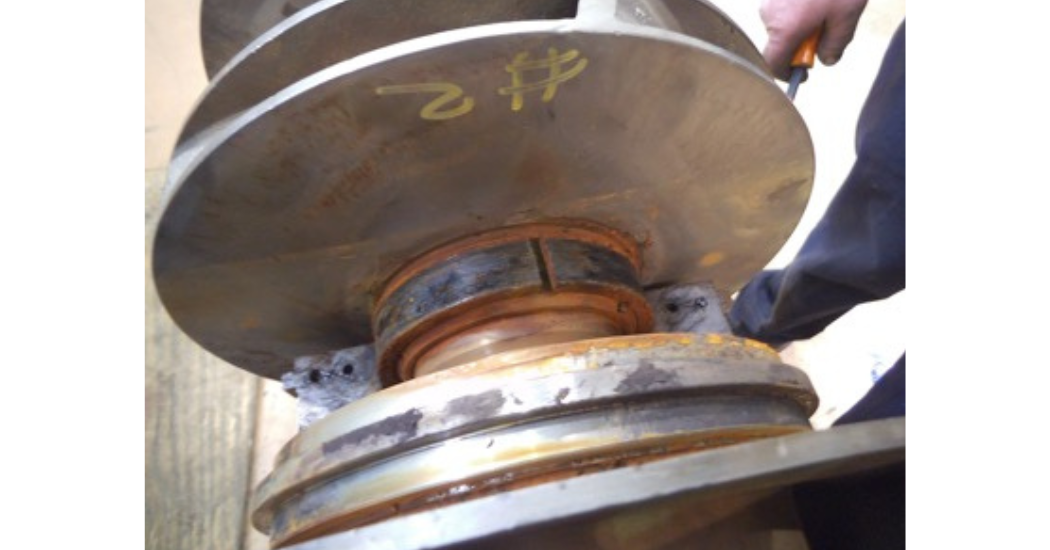 The investigation of the second pump determined that improper materials and poor rotor setting were the root causes of the failure.
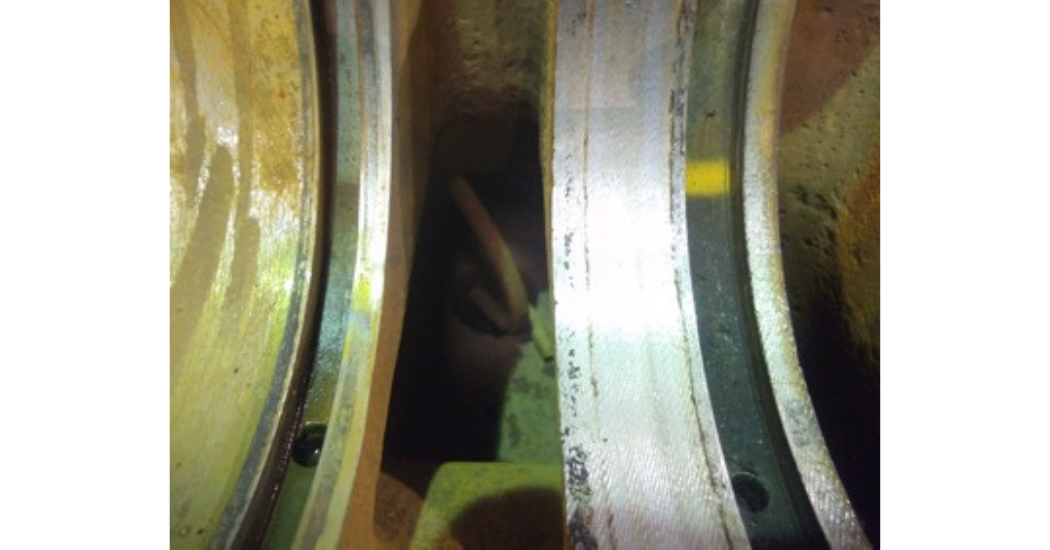 After reviewing the EFA Report, the mill was able to negotiate a warranty settlement with the OEM. With the design issues identified, they were then able to work with the independent service provider to make improvements that would eliminate the underlying causes of the repeated problems.
Material Improvements
The aftermarket service provider’s reliability engineers recognized that the standard heat-treated 400 series steel that was being used for the casing and impeller rings was at the root of the reliability issues. The material was being through-hardened to achieve the specified surface hardness. This process often results in a brittle material that can fail under stress.
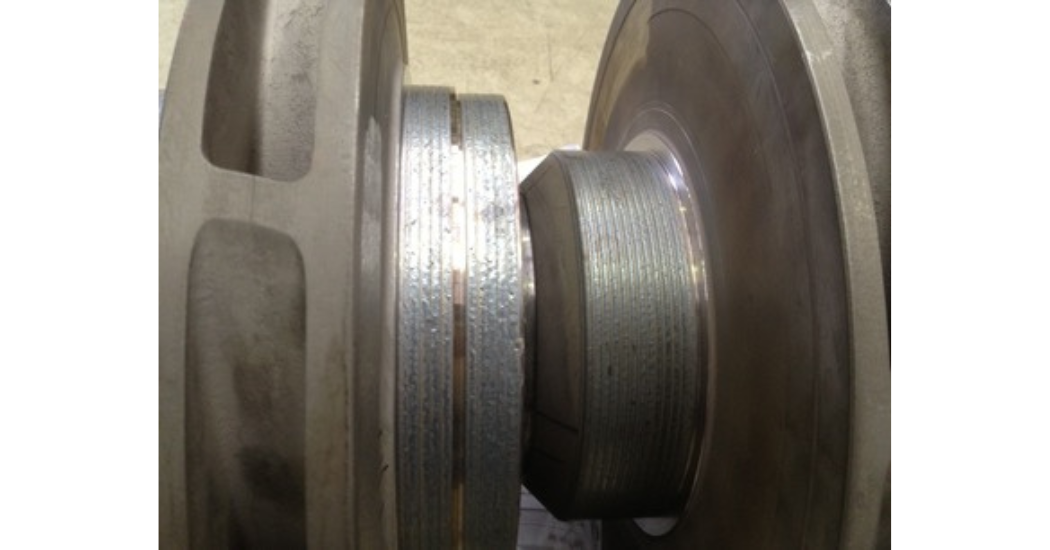 To provide the necessary hardness without compromising the ductility of the material, a 410 martensitic steel with a laser deposited weld-overlay was provided as an upgraded material. This process provides the same surface hardness as through-hardening without the brittleness and susceptibility to stress cracking.
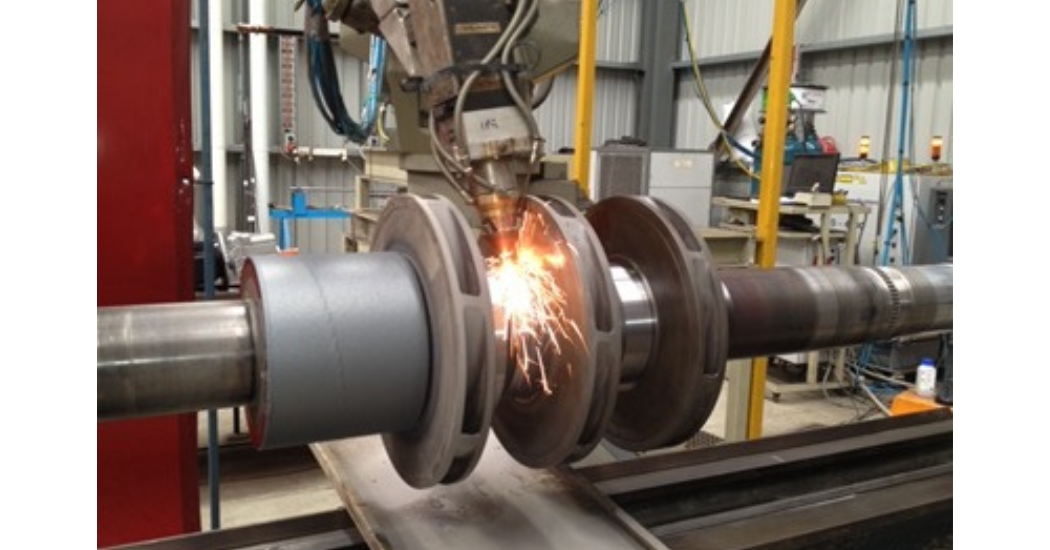 Laser Deposit Welding (LDW) is an innovative technology. It is an additive production process that uses a laser beam to form a pool of molten metal (a melt pool) on the surface of a metallic substrate. Metal powder is then injected into the melt pool using a gas stream. The absorbed metal powder produces a hard metal deposit on the surface.
 Impact & Results
Using LDW technology, the aftermarket service provider ensured a very hard wear surface. Both the impeller and stationary wear rings were manufactured with the same hardness; because there is no hardness differential, there is no sacrificial component. When the rings come into contact, instead of wearing they will “bounce,” significantly extending the life of the component.
By deterring the opening of the critical wear ring clearances, the mill was able to maintain rotor stability and performance for a much longer period of time. This upgrade resulted in an extension in the mean time between repair (MTBR) from two years to more than five years.
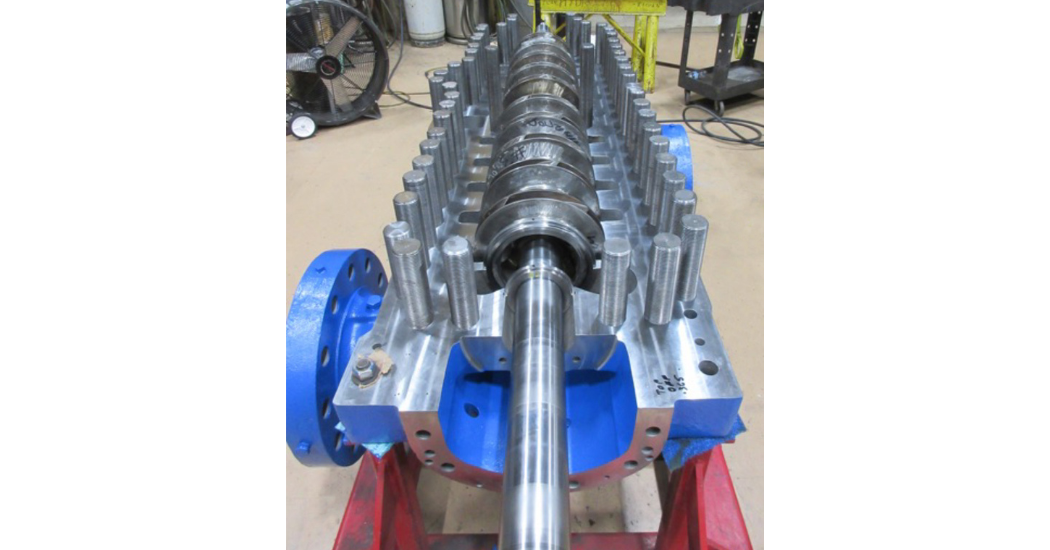 When one of the subsequent descale pumps failed due to loss of suction pressure, the material upgrade added another benefit. As a result of the superior material hardness, damage to the internals of the pump during this transient event were minimal. The estimated cost savings from this protection was more than $100,000.
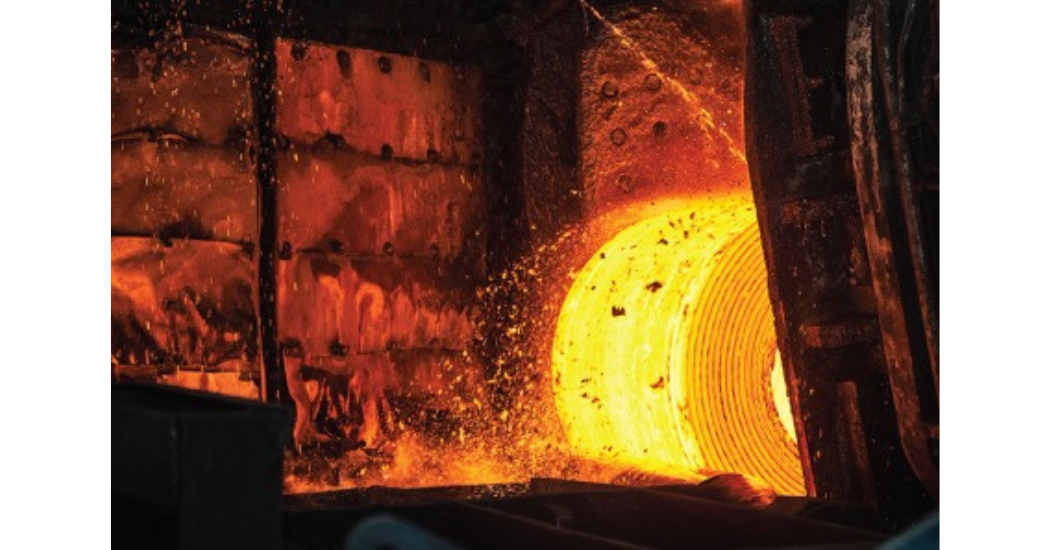
Another collateral benefit of the material improvement was increased energy savings. Descaling pumps discharge into high pressure nozzles that are used to remove scale from the steel bars before they enter the rolling mill. This is a high energy service. Even when no bar is present, high pressure water is bypassed into the water pit, using significant energy. If the roughing mill is reversing, there are descale nozzles on either side, using even more energy.
Upgrading to a harder material with increased wear resistance ensures that the internal clearances will remain at design for a much longer period of time. It also allows the clearance to be slightly decreased. Because the wear ring clearance regulates internal recirculation, this clearance directly relates to pump efficiency and energy use. Slowing the opening of pump clearances can result in significant energy savings during the operational life of the pump.
Conclusion
When the OEM was unable to provide consistent, reliable repairs, the steel mill turned to an independent service provider with their urgent request for help. Using forensic analysis and sophisticated technologies, they were able to assist the steel mill in keeping production running. Today, the mill uses the aftermarket service provider as a single source supplier and has established the laser deposit welding process as a standard procedure for all future repairs.