Ceramic fiber not only outperforms conventional insulation materials but also paves the way for the modernization of industrial furnaces. Its unique mechanical properties have made it a popular research topic in recent years, facilitating several breakthroughs.
Why Ceramic Fiber Is a Material Science Breakthrough
Ceramic fiber is an insulation material made from ceramic filaments or threads. It is typically composed of aluminum oxide and silicon oxide — alumina and silica. These materials excel as insulators due to their high melting points and high-temperature stability. Small air pockets are trapped between the intertwined alumina silicate fibers, creating an insulating barrier. As a result, this material can withstand extreme temperatures, whether in the form of paper, blankets, textiles or rope.
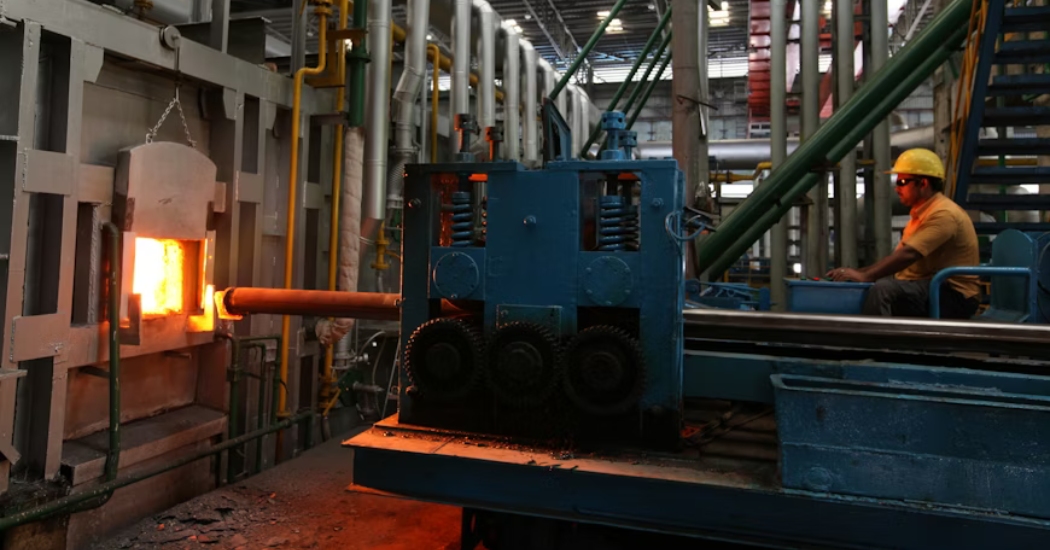
Ceramic fiber insulation can withstand up to 2,600° Fahrenheit, making it suitable for harsh environments, such as the inside of industrial furnaces, which can reach temperatures above 2,000° Fahrenheit. Industrial furnaces rely on adequate insulation to uniformly retain and disperse heat. Aside from high heat resistance, ceramics are known for their excellent thermal insulating properties, low thermal conductivity, high thermal shock resistance and resilience to wear and tear. When made into an insulating fiber, this material is lightweight, flexible and easily cut, simplifying installation.
How Ceramic Fiber Insulation Compares to Alternatives
Refractory bricks are commonly used in industrial furnaces because they offer similar heat resistance. However, their high thermal mass can slow heat-up and cool-down times, decreasing throughput. Moreover, their high structural weight means installation and maintenance come at greater complexity and cost.
Low thermal mass enables faster heat-up and cool-down times, thereby increasing equipment availability. With rapid cycling, facilities can significantly accelerate production and reduce maintenance downtime.
Ceramic fiber products offer the lowest heat loss compared to refractory bricks, mineral wool boards and asbestos millboard. These materials ensure high-temperature equipment retains as much heat as possible during operation.
The Benefits of Using Ceramic Fiber in Industrial Furnaces
Ceramic fiber can effectively hold heat to slow heat transfer drastically. Low thermal conductivity directly translates to a dramatic energy reduction, potentially lowering an organization’s operational expenses.
This energy-efficient insulator can result in direct cost savings for organizations. For original equipment manufacturers (OEMs), this creates a design opportunity. A more efficient furnace may require less fuel, allowing for a smaller, less expensive pumping system to be specified in the overall project design.
OEMs may soon be able to produce smaller, more efficient components at scale. While traditional ceramic fibers typically have a diameter of 5 micrometers, researchers are exploring nanometer-scale versions. At this scale, thermal insulation performance and mechanical properties improve significantly.
Current manufacturing technologies are limited, but electrospinning is emerging as a promising approach because it is scalable, versatile and simple. Moving from the microscale to the nanoscale could revolutionize industrial furnaces.
The Revolutionary Impact of Ceramic Fiber Insulation
The benefits of utilizing ceramic fiber insulation go beyond enhancing energy efficiency. It represents a fundamental shift in how industrial sectors approach high-temperature thermal processing.
Optimizing Maintenance Schedules
Since dense refractory bricks store massive amounts of heat, they are slow to heat up and cool down, which results in inefficient startups and shutdowns. This characteristic also stresses fuel and coolant circulation pumps, leading to less predictable thermal loads across the entire system.
In addition to optimizing throughput, faster furnace cycles lengthen equipment’s service life while reducing maintenance requirements. As a result, pumps handling everything from fuel to molten metal are easier to manage.
Transforming Industrial Furnace Design
Unlike refractory bricks or mineral wool boards, ceramic fibers are lightweight and flexible to allow for more modular designs and easier repairs. Consequently, organizations can integrate pumps and piping more efficiently, reducing pressure loss and improving hydraulic efficiency. They can even retrofit old furnaces that cannot support the weight of new brick.
This transformative property also applies to the entire thermal system, including the pumps circulating fluids or molten materials. OEMs can design them for more agile, on-demand operation rather than harsh, continuous-duty heat management.
Looking to the Future of Ceramic Fiber Insulation
As research and development teams identify more cost-effective, scalable manufacturing methods, ceramic fiber will gradually replace conventional insulation materials. As it does, industrial sectors will transform their approaches to high-temperature thermal processing.