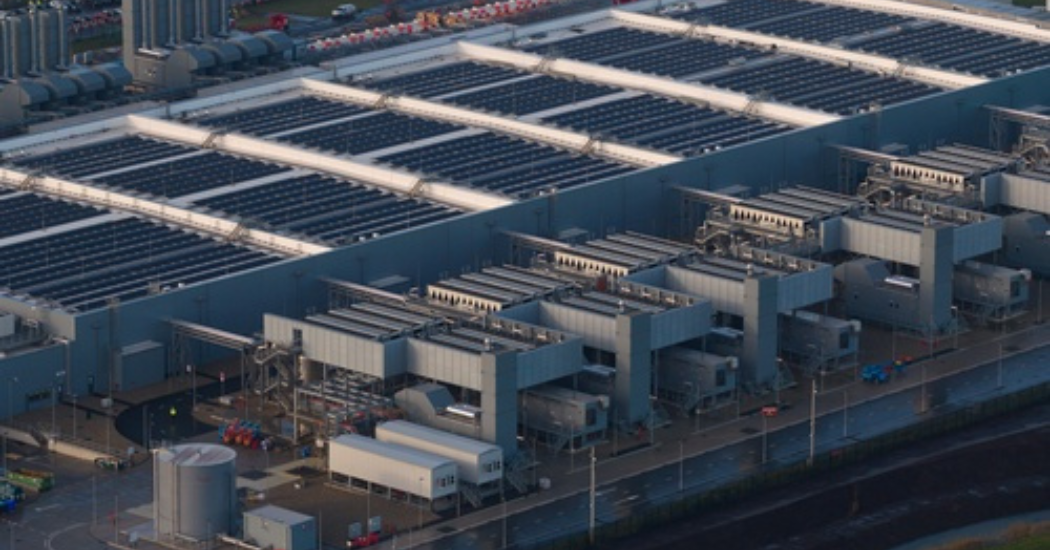
Data centers accounted for at least 60% of last year’s increase in U.S. electricity demand, straining an aged grid that struggles to keep up despite investments made in upgrades, latest data and analysis from research firm BloombergNEF and Business Council for Sustainable Energy (BCSE) show.
After remaining relatively flat through much of the 2010s, U.S. electricity demand rose 2% compared with the prior year and was up 8% over the past decade.
Surging demand for artificial intelligence (AI) services more than any other use is driving the rapid development of power-hungry data centers, a trend the report said is “showing no signs of slowing down.”
Electricity demand has ticked up in the last five years from electric vehicles and electrification of some industrial processes, “but the real story is data centers and AI boom,” Trina White, BNEF senior associate for North America’s energy transition team, told reporters Tuesday.
Last year, electricity demand from data centers alone grew 21% compared with 2024, 150% in the past five years and 400% over the past decade, White pointed out.
As the graph below indicates, most of this growth is occurring in the Midwest, Texas and the Southeast, where the regional electricity operators, notably PJM, are struggling to bring new sources of electricity online because the grid lacks spare capacity.
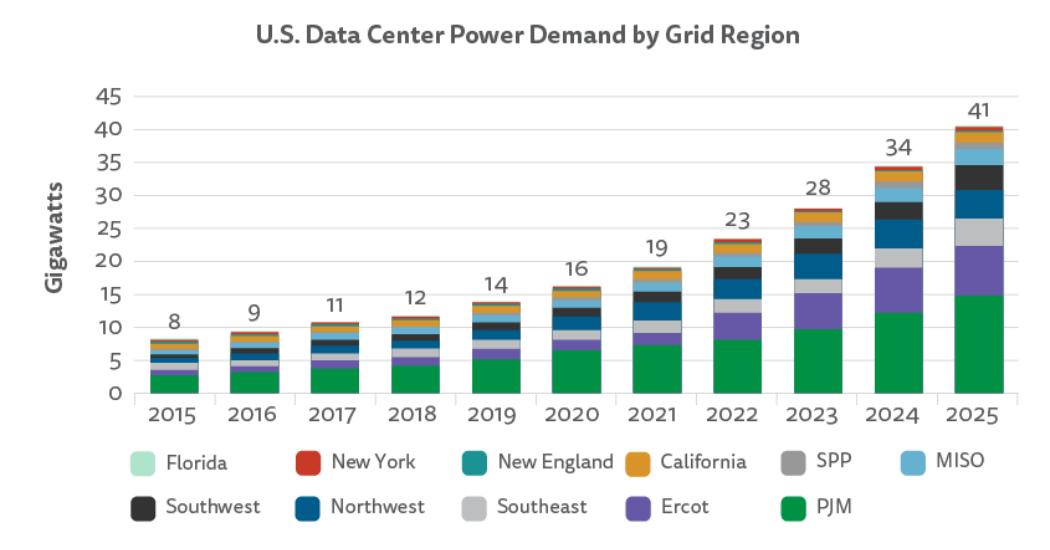 Source: Sustainable Energy in America: 2026 Factbook by BloombergNEF and Business Council for Sustainable Energy
To date, 23 gigawatts worth of data center computing load has been brought online and another 48 gigawatts are either under construction or committed with land, power and permits secured.
Because data centers require round-the-clock power, the federal government, states, regional grid operators and utilities all have a stake in modernizing the grid to accommodate new generation sources.
Last year, grid expansion investment rose to a record $115 billion, up from $105 billion the year prior, according to the report. That increase reflected both higher equipment costs and investment in transmission and distribution systems.
At the same time, distributed solar, storage and on-site natural gas generation are increasingly eyed as speedy sources for deployment because regional grids have little capacity to spare.
“In thinking about 2025 it is increasingly clear that we need more energy now,” said BCSE President Lisa Jacobson, urging Congress to pass technology neutral permitting reform and invest more dollars in energy infrastructure and innovation.
Originally published by DailyEnergyInsider