Factories rarely operate in clean or climate-controlled conditions. Dust, humidity, and heat are part of everyday industrial environments, and they directly affect the performance of machines such as compressed air systems. The result is often unplanned breakdowns and costly downtime. According to a global survey by ABB, more than two-thirds of industrial companies experience unplanned outages at least once a month, with downtime costing the average business close to $125,000 per hour. Atlas Copco, global leader in mobile compressors, shares three practical insights to help industrial operators reduce downtime and manage equipment reliability in harsh operating conditions.
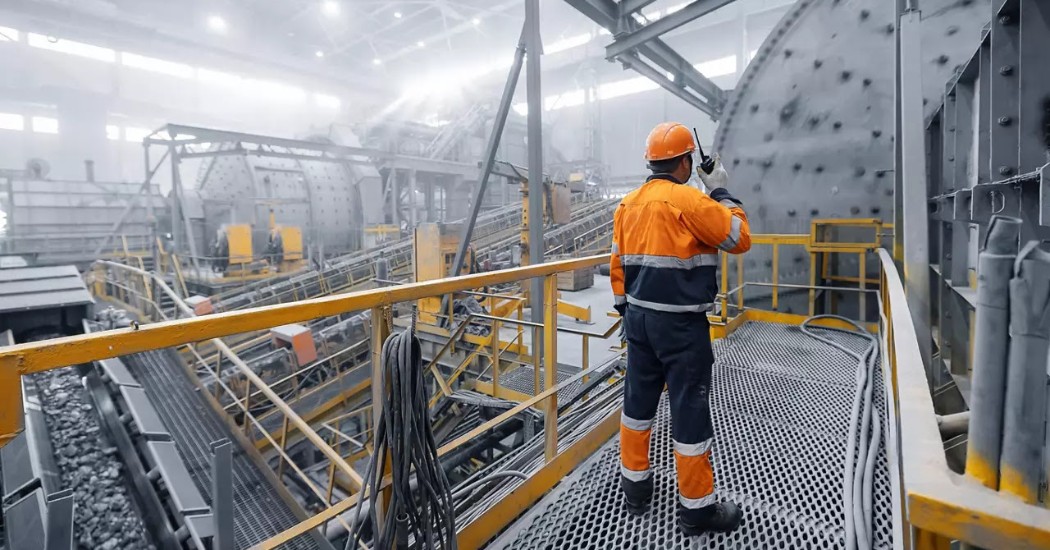
Not all manufacturing environments are the same. While some plants can maintain stable temperatures and clean air, many others operate equipment directly on production floors or outdoors, where conditions are less predictable. High humidity can, for example, accelerate corrosion inside compressors and downstream equipment, while also affecting air quality. Dust and airborne particles can clog filters and increase mechanical wear. Extreme temperatures create additional risks, from overheating in hot climates to condensation and ice formation in freezing conditions.
Once equipment leaves a clean room, these external stress factors begin to influence performance, uptime, and service life. The operational and financial impact is clear. A global study by ABB further indicates that 69 percent of plants face unplanned outages at least once a month.
When the environment cannot be controlled
In many industries, isolating equipment from its surroundings is not an option. In cement production, for example, compressors often operate close to crushers and conveyors where dust levels remain consistently high. Glass manufacturing involves continuous heat and elevated operating temperatures, while chemical production sites are frequently exposed to corrosive atmospheres.
In these settings, the focus shifts from protecting equipment in ideal conditions to keeping production running despite the environment. To address these challenges, Atlas Copco highlights three practical considerations:
- Preventive maintenance: Regular inspections and scheduled servicing help identify early signs of wear before they develop into failures. Monitoring oil levels, filter conditions, and vibration trends allows maintenance teams to intervene early and reduce the risk of unplanned downtime.
- Monitoring and control: Real-time monitoring tools, including pressure sensors, flow meters, and leak detection, provide insight into system performance. Data and alerts help teams detect deviations from normal operation, enabling faster responses, and more predictable maintenance planning.
- Equipment suitability for the environment: Systems that operate outside controlled settings need to be suited to those conditions. Sealing, corrosion protection, and thermal management play a key role in maintaining reliability. Selecting equipment designed to withstand environmental exposure can help limit premature wear, reduce unexpected failures and support more stable long-term operation.
“Many industrial sites operate in conditions that cannot be fully controlled, and that reality needs to be reflected in how equipment is designed, maintained and monitored,” says Panagiotis Papaioannou, Product Marketing Manager Sustainability at Atlas Copco. “Reliability is not just about capacity, it is about understanding how environment, maintenance and monitoring work together to prevent downtime. When those elements are aligned, operators can extend service life and keep production running more predictably, even in challenging conditions.”
About Atlas Copco Group
Atlas Copco Group enables technology that transforms the future. We innovate to develop products, services and solutions that are key to our customers’ success. Our four business areas offer compressed air and vacuum solutions, energy solutions, dewatering and industrial pumps, industrial power tools, and assembly and machine vision solutions. In 2023, the Group had revenues of BSEK 173, and at year end about 53 000 employees. www.atlascopcogroup.com
Power Technique
Power Technique is a business area within Atlas Copco Group. We transform the future together with our customers with leading edge technology in portable air, energy solutions, dewatering and industrial pumps. We innovate to develop products, services and solutions that are key to our customers’ success.
Portable Air
Portable Air is a division within Atlas Copco Group, and part of the Power Technique Business Area. We design, manufacture and market mobile compressors, high pressure boosters and light demolition handheld tools for tough industries all over the world and under various brands. We are headquartered in Antwerp, Belgium, with production in Brazil, China, India and the United States and a global sales organization.